Porter is an Indian logistics and transportation platform that helps individuals and businesses move goods from one location to another. Its services include mini-truck bookings, two-wheeler deliveries, intercity transportation, and logistics solutions for businesses, depending on availability in a particular location. By connecting customers with vehicle operators through a technology-driven platform, Porter simplifies local transportation and goods movement. But if Porter connects customers with drivers and vehicle owners, how does the company make money? Its business model focuses on facilitating transportation bookings, charging customers for logistics services, and earning revenue from the delivery and transportation operations it manages. 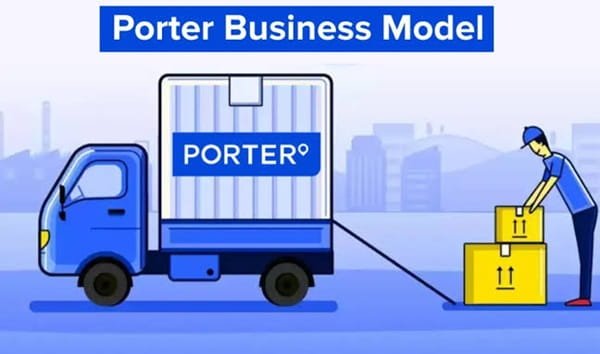 Understanding the Porter business model reveals how a technology-enabled logistics platform can generate revenue without necessarily owning every vehicle used to fulfil customer orders.
1. What Is the Porter Business Model?
Porter follows a technology-enabled, on-demand logistics marketplace model. It connects customers who need goods transported with drivers and vehicle operators who can fulfil those requirements. Customers can use its app or other available booking channels to arrange transportation for furniture, commercial goods, household items, inventory, and other eligible shipments. Businesses can also use logistics services to move products between suppliers, warehouses, shops, and customers. Porter’s platform helps coordinate bookings, pricing, driver allocation, and delivery operations. Depending on the service, the company may work with independent driver-partners, fleet operators, and other logistics partners. Its business model has three main components:
- Customer bookings: Individuals and businesses pay for transportation services.
- Driver and vehicle network: Drivers and vehicle operators fulfil bookings through the platform.
- Technology and logistics coordination: Porter manages the systems that connect customer demand with available transportation capacity.
This model allows Porter to serve different customer segments through a common technology platform.
2. Revenue From Mini-Truck and Commercial Vehicle Bookings
One of Porter’s important service categories is goods transportation using mini-trucks and other commercial vehicles. Customers use these vehicles to move bulky items, commercial inventory, furniture, construction materials, and other goods that cannot conveniently be transported on a two-wheeler. For example, a furniture shop in Delhi may need to deliver a sofa to a customer’s home. Instead of maintaining its own delivery vehicle, the shop can book a suitable vehicle through Porter. The customer pays the applicable transportation charge, while the driver or vehicle operator receives payment according to the relevant commercial arrangement. Porter earns revenue from providing and coordinating the service. The final booking price may depend on factors such as distance, vehicle type, trip duration, demand, additional stops, and applicable charges. This service category helps Porter serve both individual customers and businesses that require regular goods transportation.
3. Two-Wheeler and Small-Item Deliveries
Porter also offers two-wheeler-based delivery services in supported locations. These services are useful when customers need smaller packages or items transported over relatively short distances. Potential users include retailers, small businesses, offices, and individuals who need convenient local deliveries. For example, a shop may use a two-wheeler delivery service to transport a small order to a nearby customer. Compared with larger commercial vehicles, two-wheelers can be more suitable for smaller shipments and certain congested urban routes. Porter can earn revenue by facilitating these bookings and charging for the delivery service. The amount depends on the service’s pricing structure, distance, demand, and other applicable conditions. Offering different vehicle categories enables Porter to serve customers with varying transportation needs rather than depending entirely on truck bookings.
4. Business and Enterprise Logistics Services
Porter can also generate revenue by serving businesses with recurring or larger-scale transportation requirements. Retailers, distributors, manufacturers, and other enterprises may need to move goods between warehouses, stores, suppliers, and customers. Managing these deliveries independently can require vehicles, driver coordination, scheduling, and operational oversight. A logistics platform can simplify this process by providing access to transportation capacity and digital booking tools. For example, a retailer operating several stores may need to replenish inventory regularly. By using a logistics service, the retailer can arrange vehicle movements as needed instead of maintaining a dedicated fleet for every requirement. Depending on the service and contract, Porter may earn revenue through individual bookings, negotiated commercial rates, or other logistics arrangements. Business customers can be valuable because recurring transportation requirements may create repeat demand. However, the profitability of these arrangements depends on pricing, service costs, and operational efficiency.
5. How Porter Earns Money From Each Booking
Porter’s revenue model can be understood through a simple example. Suppose a customer books a mini-truck for a local delivery and pays ₹800 for the transportation service. Porter coordinates the booking and arranges fulfilment through its vehicle network. The amount paid by the customer is not necessarily equal to Porter’s revenue or profit. Depending on the arrangement, part of the payment may be payable to the driver or vehicle operator, while the platform retains or recognises the amount applicable to its services. The company’s actual revenue recognition depends on its contractual role and accounting treatment. Therefore, it would be inaccurate to assume that Porter keeps the entire booking amount. Porter’s profit is different from its revenue because it must also cover expenses such as technology development, customer support, marketing, employee costs, payment processing, and operational management.
6. Technology and Operational Efficiency
Technology is essential to Porter’s business model. A logistics platform must match customer requirements with suitable vehicles, coordinate bookings, provide price estimates, and manage delivery information. Digital systems can help reduce the time required to arrange transportation and improve visibility into the delivery process. They can also help the company understand demand patterns and manage available capacity. For example, if many customers in an area require deliveries during particular hours, demand information can help Porter plan driver availability more effectively. Better coordination can improve the customer experience and help reduce inefficiencies. However, technology alone does not guarantee profitability. The company must also maintain a reliable driver network and deliver services at a competitive cost.
7. What Costs Affect Porter’s Profitability?
Porter’s financial performance depends on how much it earns from logistics services compared with the cost of operating its platform and fulfilling customer requirements. Important cost factors may include:
- Driver-partner and vehicle-operator payments under applicable arrangements.
- Technology development and platform maintenance.
- Customer acquisition and promotional campaigns.
- Customer support and booking management.
- Employee expenses and operational infrastructure.
- Payment processing, insurance-related expenses, and other service costs where applicable.
For example, a booking may generate revenue but still contribute little to profit if the fulfilment cost is high. Efficient routing, suitable pricing, repeat bookings, and strong vehicle utilisation can help improve unit economics. The company must balance competitive prices for customers with attractive earning opportunities for its driver-partners.
8. Challenges in the Porter Business Model
Porter faces several challenges common to on-demand logistics businesses. Competition: Local transport operators, other logistics platforms, and traditional goods carriers compete for customers. Demand fluctuations: Bookings can vary by location, time of day, season, and economic activity. Driver availability: A shortage of suitable vehicles during peak demand can affect service quality and delivery times. Operating costs: Fuel prices, vehicle maintenance, and other transportation expenses can influence the overall cost of moving goods. Customer trust: Customers expect transparent pricing, reliable fulfilment, and safe handling of their belongings or commercial goods. Managing these challenges is important for customer retention and long-term financial sustainability.
Conclusion
Porter makes money by facilitating goods transportation and delivery services for individuals and businesses. Its business model includes mini-truck bookings, two-wheeler deliveries, and logistics solutions for customers with recurring transportation needs. The company connects customer demand with a network of drivers and vehicle operators, using technology to coordinate bookings and delivery operations. This approach allows it to offer transportation services without necessarily owning every vehicle used in its network. However, the total amount customers pay is not the same as Porter’s revenue or profit. Driver payments, operating expenses, technology investments, and customer acquisition costs all influence its financial performance. Ultimately, Porter’s success depends on attracting repeat customers, maintaining a dependable vehicle network, and coordinating deliveries efficiently while keeping costs under control.