Delhivery is one of India’s major logistics and supply chain services companies, helping businesses transport packages, deliver online orders, and manage shipments across the country. As e-commerce continues to grow, logistics companies play an important role in connecting sellers, warehouses, distribution centres, and customers.
Unlike an online retailer, Delhivery does not primarily make money by selling products to consumers. Instead, it earns revenue by providing logistics, transportation, warehousing, and related supply chain services to businesses.
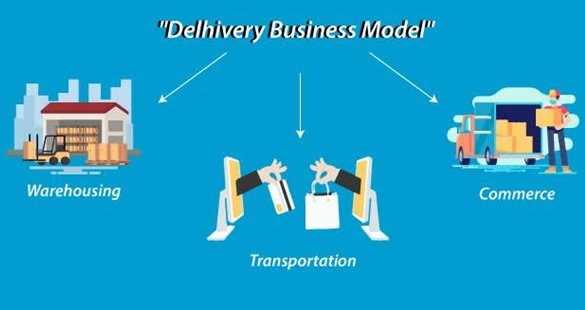
But how does Delhivery generate revenue from millions of shipments? Its business model combines parcel delivery charges, part-truckload and full-truckload transportation, warehousing, supply chain solutions, and cross-border logistics services.
1. What Is the Delhivery Business Model?
Delhivery follows a technology-enabled logistics and supply chain business model. It helps businesses move goods from one location to another through an integrated network of transportation facilities, sorting centres, warehouses, and delivery partners.
Its customers include e-commerce companies, online sellers, retailers, manufacturers, and other businesses that need logistics support.
Instead of relying on a single service, Delhivery offers multiple solutions for different shipment sizes and transportation requirements. A small online order may require parcel delivery, while a retailer moving large quantities of goods may need freight transportation.
The company generates revenue by charging customers for these services. Pricing can depend on shipment weight, dimensions, distance, delivery speed, service type, handling requirements, and other contractual terms.
Its technology systems help coordinate shipments, track packages, manage capacity, and improve operational efficiency.
2. Parcel Delivery Services
Parcel delivery is a major part of Delhivery’s business. E-commerce companies and online sellers need logistics partners to transport customer orders from warehouses or sellers to buyers.
Delhivery collects shipments, processes them through sorting facilities, transports them between locations, and completes last-mile delivery. Depending on the arrangement, it may also handle returns and exchanges.
For example, suppose an online seller in Delhi receives an order from a customer in Mumbai. The seller can use Delhivery to transport the package to the customer’s address. Delhivery earns revenue for providing the agreed logistics service.
The amount charged may depend on the package’s weight, dimensions, route, service level, and commercial agreement with the seller.
Large e-commerce businesses can generate substantial shipment volumes, making parcel delivery an important revenue opportunity. However, profitability depends on how efficiently the company handles and transports each package.
3. Part-Truckload and Full-Truckload Transportation
Delhivery also provides freight transportation for businesses that need to move larger quantities of goods.
Part-truckload (PTL) services allow businesses to transport shipments that do not require an entire truck. Goods from multiple customers can be consolidated to use available vehicle capacity more efficiently.
For example, a manufacturer sending several cartons of products to a distributor may not need a dedicated truck. A PTL service can move the shipment alongside compatible freight from other customers.
Full-truckload (FTL) services are designed for shipments that require an entire vehicle or a dedicated truck movement. Businesses may use these services to transport large quantities of inventory between factories, warehouses, and distribution centres.
Delhivery earns revenue by charging for these transportation services. Rates may depend on distance, vehicle requirements, shipment characteristics, route conditions, and agreed service terms.
These offerings help the company serve customers beyond the e-commerce parcel market.
4. Warehousing and Supply Chain Services
Many businesses need more than transportation. They also require storage facilities, inventory management, order processing, and coordination between suppliers and distribution channels.
Delhivery offers warehousing and supply chain solutions that help businesses manage these activities. Depending on the service arrangement, customers may use storage facilities, fulfilment operations, inventory handling, and distribution support.
For example, an online retailer may store products at a fulfilment facility before orders are received. When a customer places an order, the inventory can be picked, packed, and prepared for dispatch.
Delhivery can earn revenue through contracted logistics services and related operational charges. The commercial structure may vary according to the customer’s requirements and the scope of work.
These services can also connect warehousing with transportation, helping businesses coordinate multiple stages of the supply chain through a logistics partner.
5. Cross-Border and International Logistics
Businesses that import or export products need transportation and logistics support across international markets. Delhivery provides cross-border logistics solutions that can help businesses move shipments between countries.
Depending on the service and destination, international shipments may involve transportation coordination, customs-related processes, and connections with logistics partners.
For example, an Indian business shipping products to an overseas customer may require support in moving the shipment from its origin to the destination market.
Delhivery can earn revenue from the logistics services it provides or arranges under the applicable commercial agreement. International shipping costs may depend on shipment weight, dimensions, destination, transport mode, customs requirements, and other factors.
This segment allows the company to serve businesses with international shipping needs in addition to domestic logistics demand.
6. Technology as a Competitive Advantage
Technology is central to Delhivery’s operating model. Logistics networks must coordinate large numbers of shipments, vehicles, facilities, delivery routes, and customer requirements.
Digital systems can support shipment tracking, route planning, network management, sorting operations, and delivery coordination. These tools help businesses monitor shipments and give logistics operators better visibility into their networks.
For example, tracking systems allow a business to check shipment progress and identify potential delays. Operational data can also help logistics companies plan capacity and manage transportation resources.
Technology does not automatically generate profit, but it can improve efficiency, support service quality, and help a logistics network handle larger volumes. These capabilities are important in a business where operational costs can significantly affect margins.
7. How Delhivery Earns Profit
Revenue and profit are not the same. Delhivery earns revenue by providing logistics services, but it must also pay the costs of operating its network.
Major expenses can include transportation, fuel, facility operations, employee costs, technology, shipment handling, and payments to logistics partners. The exact cost structure varies across services.
Profitability depends on factors such as shipment volume, vehicle utilisation, route efficiency, delivery density, pricing, and the ability to control operating expenses.
For example, consolidating several compatible shipments into a well-utilised vehicle may reduce the transportation cost per shipment. In contrast, low shipment volumes, inefficient routes, or repeated delivery attempts can increase costs.
Delhivery must therefore balance competitive pricing with efficient operations to maintain sustainable margins.
8. Challenges in the Delhivery Business Model
Delhivery faces several challenges in the logistics industry.
Intense competition: Other logistics companies, courier providers, and in-house delivery networks compete for business customers.
Rising operating costs: Fuel prices, wages, facility expenses, and transportation costs can put pressure on margins.
Delivery expectations: Customers increasingly expect reliable tracking, timely delivery, and efficient returns.
Demand fluctuations: E-commerce sales and freight volumes can change with seasons, economic conditions, and business activity.
Network complexity: Managing shipments across numerous locations requires coordination, capacity planning, and consistent service quality.
The company’s long-term performance depends on managing these challenges while maintaining reliable services and controlling costs.
Conclusion
Delhivery makes money primarily by providing logistics and supply chain services to businesses. Its revenue streams include parcel delivery, part-truckload and full-truckload transportation, warehousing, supply chain solutions, and cross-border logistics.
Its technology-enabled network allows it to serve customers with different shipping requirements, from individual e-commerce parcels to larger freight movements. By combining transportation with storage and fulfilment services, Delhivery can support several stages of a business’s supply chain.
However, profitability depends on more than shipment volume. Transportation expenses, network utilisation, pricing, and operational efficiency all influence financial performance. Ultimately, Delhivery’s business model succeeds when it can move goods reliably, meet customer requirements, and deliver those services at a sustainable cost.