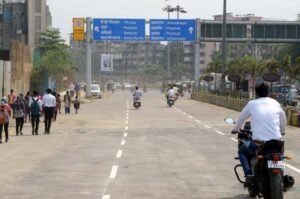
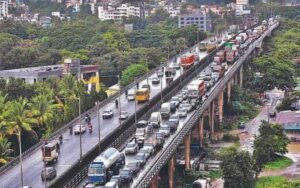
Tilak Bridge is one of the most important east-west road connections in Dadar, Mumbai. The century-old railway overbridge links Dadar East with Dadar West by crossing the railway tracks near Dadar station. Its eastern end connects with Dr. Babasaheb Ambedkar Road, while the western side meets Dr. N. C. Kelkar Road, giving commuters convenient access towards Shivaji Park, Prabhadevi, Mahim, Parel and other parts of central Mumbai. Maharashtra Rail Infrastructure Development Corporation (MRIDC) officially identifies the Tilak ROB as the bridge connecting these two major roads near Dadar Railway Station.
The existing bridge dates to 1925 and has remained a crucial part of Mumbai’s road network for about a century. However, limited road capacity, ageing infrastructure and increasing traffic have made replacement necessary. A modern six-lane cable-stayed bridge is now being constructed alongside the old structure in phases.
As of 2026, motorists continue to use the existing Tilak Bridge while construction of the first section of the replacement proceeds beside it. The new project is especially important because closures and reconstruction of other railway bridges in central Mumbai have placed additional pressure on the Dadar corridor.
Quick Overview of Tilak Bridge
| Particular | Details |
| Name | Tilak Bridge |
| Location | Dadar, Mumbai, Maharashtra |
| Bridge Type | Railway Overbridge |
| Existing Bridge | British-era steel-girder structure |
| Existing Bridge Completed | 1925 |
| Connects | Dadar East and Dadar West |
| Eastern Approach | Dr. Babasaheb Ambedkar Road |
| Western Approach | Dr. N. C. Kelkar Road |
| Railway Crossing | Dadar railway tracks |
| New Bridge Type | Twin cable-stayed road bridge |
| New Bridge Length | About 600 metres |
| New Bridge Lanes | Six lanes |
| Project Agencies | BMC and MRIDC/MahaRail |
| Nearby Areas | Dadar, Matunga, Prabhadevi, Parel, Shivaji Park and Mahim |
| Major Transport Hub | Dadar Railway Station |
| Known For | Important east-west road connection and heavy traffic |
MRIDC’s original tender for the replacement project carried a value of approximately ₹216.16 crore, although later reporting places the broader current project cost at around ₹375 crore following design, scope and implementation developments.
Where is Tilak Bridge Located?
Tilak Bridge is located in the heart of Dadar, immediately beside one of Mumbai’s busiest railway hubs.
On the east, the bridge approaches Dadar TT and Dr. Babasaheb Ambedkar Road, one of central Mumbai’s major north-south roads. From this side, motorists can continue towards Matunga, Sion and the Eastern Express Highway in the north or Parel, Byculla and South Mumbai in the opposite direction.
On the western side, the bridge joins Dr. N. C. Kelkar Road, providing access towards Dadar West, Shivaji Park, Portuguese Church, Prabhadevi and the wider Mahim-Worli belt.
The bridge crosses railway infrastructure associated with Dadar, where Central and Western Railway services make the locality one of Mumbai’s most important suburban transport interchanges.
Tilak Bridge Route and Road Connectivity
Tilak Bridge provides an important cross-city link because Mumbai’s north-south railway corridors create a major physical barrier between the eastern and western parts of Dadar.
Important road connections include:
- Babasaheb Ambedkar Road: Major connection on the Dadar East side towards Matunga, Sion, Parel and Byculla.
- N. C. Kelkar Road: Main approach through Dadar West towards Shivaji Park and surrounding neighbourhoods.
- Dadar TT Circle: Important junction immediately east of the railway corridor.
- Shivaji Park: Easily accessible from the western side through the Dadar road network.
- Prabhadevi: Reached through Dadar West and roads such as Gokhale Road and Veer Savarkar Marg.
- Mahim: Accessible towards the northwest through Dadar West.
- Parel: Located south of Dadar and connected through Dr. Babasaheb Ambedkar Road and adjoining streets.
- Matunga: Located immediately north of Dadar and accessible from both eastern and western road networks.
The bridge is particularly useful for motorists who need to cross from central Mumbai’s eastern arterial roads towards the western neighbourhoods without making a much longer detour.
Why is Tilak Bridge Important?
Tilak Bridge is important because Dadar is not simply a residential neighbourhood. It is one of Mumbai’s busiest railway, road, shopping and employment interchange areas.
The bridge allows traffic to move directly between the two sides of Dadar while passing above one of India’s busiest urban railway corridors. It also provides connectivity for vehicles travelling from areas such as Parel and Lower Parel towards Mahim and western Mumbai.
Its importance has become even greater while other old railway overbridges in central Mumbai are being reconstructed. The closure of the Sion and Elphinstone/Prabhadevi bridges at different stages has diverted additional vehicles towards available crossings including Tilak Bridge.
This explains why authorities are replacing the old structure without first completely closing the route.
Traffic Conditions at Tilak Bridge
Tilak Bridge is well known for slow-moving traffic during busy periods.
Congestion can develop on both approaches because vehicles crossing the railway lines merge into already crowded streets in Dadar East and West. The bridge also carries traffic diverted from other unavailable railway crossings. Reports during recent bridge closures documented long queues and additional pressure on Tilak Bridge.
Traffic is generally more difficult during:
- Morning and evening office hours
- Peak Dadar railway-station periods
- Major festivals and processions
- Diversions from nearby railway bridges
- Road construction or utility work
- Heavy rain
- Large events around Shivaji Park and central Mumbai
In early 2026, Mumbai Traffic Police temporarily restricted several categories of heavy vehicles between 7 AM and 11 PM from February 12 to May 12 because additional traffic from Sion and Elphinstone bridge works was creating serious congestion. That particular notification was time-limited, so motorists should rely on current traffic signs and police advisories rather than assuming the same restriction remains in force.
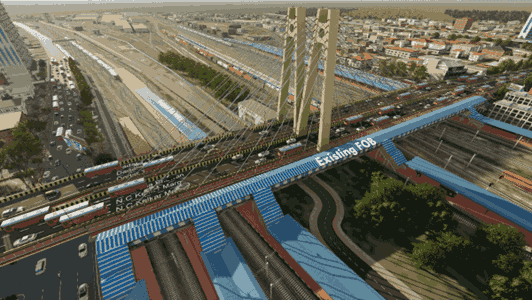
New Tilak Cable-Stayed Bridge Project
The replacement of Tilak Bridge is one of the major railway-overbridge projects currently underway in Mumbai.
MRIDC is implementing the project in association with the Brihanmumbai Municipal Corporation. The official MRIDC tender describes it as a cable-stayed road overbridge near Dadar Railway Station connecting Dr. N. C. Kelkar Road and Dr. Babasaheb Ambedkar Road.
The new structure is planned to be approximately 600 metres long with six vehicular lanes. Instead of attempting to rebuild the entire crossing at once, construction is being undertaken in phases so that Dadar does not lose this important east-west road connection.
The basic sequence is:
- Construct the first three-lane section beside the existing bridge.
- Shift road traffic onto the completed new section.
- Demolish the century-old bridge.
- Construct the second three-lane section in its place.
- Ultimately operate the complete six-lane crossing.
By June 2026, Indian Express reported that the first phase had reached about 70% progress, with completion then targeted for April 2027. Construction deadlines have changed several times because of the complexity of working beside active railway tracks and within densely built-up Dadar.
Why a Cable-Stayed Design is Being Used
Constructing a large road bridge directly above active railway infrastructure presents very different challenges from building an ordinary urban flyover.
The replacement uses a cable-stayed design, in which the bridge deck is partly supported by cables connected to towers or pylons. This arrangement helps engineers span larger distances while reducing the number of supporting structures required in the constrained railway area below.
It also allows the new bridge to provide greater road capacity without requiring the railway network beneath to stop operating for long periods.
The completed structure will increase Tilak Bridge from the capacity of the older crossing to a modern three-lane-per-direction arrangement, which is expected to handle significantly more traffic.
Old Tilak Bridge and Its History
The existing Tilak Bridge was completed in August 1925, after several years of construction. It replaced an earlier level crossing and eventually became one of Dadar’s defining transport structures.
The steel-girder bridge was built during the British period and has remained in service through enormous changes in Mumbai’s population and road traffic.
When constructed, Dadar had nowhere near today’s concentration of vehicles, residential towers, businesses and railway passengers. Over the following century, however, the bridge became one of the few convenient east-west crossings in this part of central Mumbai.
The present replacement project therefore represents a major generational change: a century-old steel railway bridge is gradually giving way to a much wider modern cable-stayed structure.
Public Transport Near Tilak Bridge
Tilak Bridge is located beside one of Mumbai’s strongest public-transport zones.
Dadar Railway Station serves both Central and Western suburban railway networks and also handles numerous long-distance trains. This makes it one of Mumbai’s most important rail interchange points.
BEST buses operate extensively through Dadar East and Dadar West, with major boarding areas around Dadar TT, Plaza Cinema, Shivaji Park and adjoining roads.
Other transport options include:
- Mumbai suburban trains
- BEST city buses
- Black-and-yellow taxis
- Auto-rickshaws in permitted suburban operating areas
- App-based cabs
Mumbai Metro does not currently have a station directly at Tilak Bridge, so suburban rail and buses remain the most important mass-transit options immediately around the crossing.
Major Landmarks and Facilities Near Tilak Bridge
Important landmarks around Tilak Bridge include:
- Dadar Railway Station: Major Central and Western Railway interchange.
- Dadar TT Circle: Prominent traffic junction on the eastern side.
- Plaza Cinema: Well-known Dadar landmark near the western approach.
- Shivaji Park: Major recreational, cultural and political landmark in Dadar West.
- Veer Kotwal Garden: Public garden and local landmark near Plaza Cinema.
- Siddhivinayak Temple: Major religious destination in nearby Prabhadevi.
- Hindu Colony: Established residential neighbourhood extending eastwards from the Dadar TT side.
- Dadar markets: The locality is well known for flower, vegetable, clothing and everyday retail markets.
Hospitals, schools, restaurants, hotels and shops are available throughout the densely developed Dadar neighbourhood.
Nearby Areas to Tilak Bridge
- Dadar East: Located directly on the Dr. Babasaheb Ambedkar Road side and centred around Dadar TT.
- Dadar West: Reached through Dr. N. C. Kelkar Road and home to major commercial streets and residential neighbourhoods.
- Shivaji Park: Prominent residential and recreational area immediately west of Dadar.
- Matunga: Established neighbourhood directly north of Dadar.
- Prabhadevi: Major residential and commercial locality southwest of the bridge.
- Parel: Important central Mumbai employment, residential and hospital district south of Dadar.
- Mahim: Located northwest of Dadar and connected through the western road network.
FAQs About Tilak Bridge Mumbai
Q1. Is there a toll for crossing Tilak Bridge?
No standalone toll plaza operates on Tilak Bridge. It functions as part of Mumbai’s regular urban road network.
Q2. Will the old Tilak Bridge be demolished while traffic is still using it?
The phased construction strategy is specifically designed to avoid that situation. The first new three-lane section is being built alongside the old bridge. Traffic is intended to move onto that section before the existing century-old structure is dismantled.
Q3. Can traffic restrictions be introduced during major events in Dadar?
Yes. Dadar frequently hosts large processions and public gatherings, and traffic police can impose temporary restrictions on Tilak Bridge and surrounding roads during occasions such as major commemorations or festivals. Such restrictions should be checked close to the travel date.
Q4. Why has reconstruction taken several years despite the bridge being relatively short?
The project is being built in a dense city centre above active railway infrastructure while the existing road connection remains in use. Construction therefore has to be coordinated with railway operations, restricted work spaces, utilities, road traffic and adjacent buildings, making it much more complicated than constructing a similar bridge on an open site.