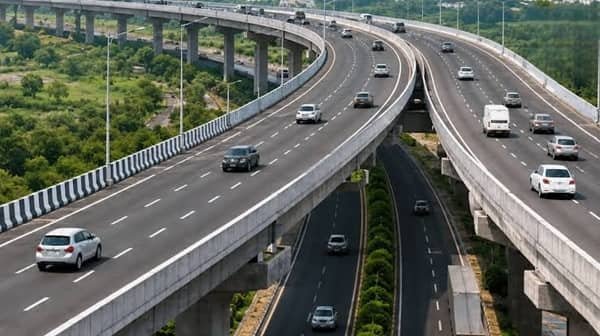
Kathipara Bridge, officially known as the Kathipara Grade Separator, is one of Chennai’s most recognisable road interchanges. Located around Guindy and Alandur in South Chennai, it uses a cloverleaf-style system of elevated roads and looping ramps to manage traffic moving between several of the city’s busiest corridors. The junction brings together Anna Salai, GST Road, Inner Ring Road and Mount-Poonamallee Road, making it an important gateway for travel towards Chennai Airport, Tambaram, Porur, Guindy and central Chennai.
The grade separator opened fully to traffic in October 2008 after being developed to remove one of Chennai’s major junction-level bottlenecks. Unlike a conventional bridge crossing a river, Kathipara is a multi-directional interchange designed to allow vehicles to change routes without forcing all movements through a single traffic signal.
Today, Kathipara has become even more complex. Existing Chennai Metro lines already pass above the interchange, while Metro Phase II Corridor 5 is adding another elevated level over the junction. CMRL describes Kathipara as one of the most challenging engineering points on the Phase II network.

Quick Overview of Kathipara Bridge
| Particular | Details |
| Official Name | Kathipara Grade Separator |
| Common Name | Kathipara Bridge / Kathipara Flyover |
| Location | Guindy-Alandur, Chennai, Tamil Nadu |
| Structure Type | Cloverleaf grade separator |
| Opened Fully | October 2008 |
| Major Roads | Anna Salai, GST Road, Inner Ring Road and Mount-Poonamallee Road |
| Nearby Areas | Guindy, Alandur, St. Thomas Mount, Ekkattuthangal and Nanganallur |
| Towards Airport/Tambaram | GST Road |
| Towards Central Chennai | Anna Salai |
| Towards Porur | Mount-Poonamallee Road |
| Towards Inner Ring Road | Jawaharlal Nehru Road corridor |
| Public Transport | Chennai Metro, MTC buses, autos and cabs |
| Known For | Large cloverleaf interchange and multi-level transport infrastructure |
| Bridge Length | Not best represented by a single bridge length because the structure consists of several elevated ramps and loops |
| Major Current Development | Chennai Metro Phase II Corridor 5 crossing above the interchange |
Where is Kathipara Bridge Located?
Kathipara Bridge is located at the Guindy-Alandur road junction in South Chennai. It sits at the meeting point of several major arterial roads that distribute traffic towards the airport, Tambaram, Porur, Koyambedu and Chennai’s central business areas.
One direction continues along GST Road towards Meenambakkam, Chennai International Airport, Pallavaram and Tambaram. Anna Salai leads towards Saidapet, Nandanam, Teynampet and central Chennai. Mount-Poonamallee Road provides the important westward connection towards Manapakkam, Ramapuram and Porur.
The location is also close to Guindy’s industrial, office and institutional belt, which generates substantial everyday commuter traffic.
Kathipara Bridge Route and Road Connectivity
Kathipara’s biggest advantage is that it allows traffic to move between several major corridors through different ramps rather than depending entirely on one surface-level junction.
Important route connections include:
- Guindy: Immediately adjoining Kathipara and one of South Chennai’s important commercial and employment areas.
- Chennai International Airport: Reached by following GST Road towards Meenambakkam.
- Tambaram: Connected southwards through the GST Road corridor.
- Porur: Accessible through Mount-Poonamallee Road.
- Ramapuram and Manapakkam: Located along the route between Kathipara and Porur.
- Saidapet: Reached along Anna Salai towards central Chennai.
- Ekkattuthangal: Located along the Inner Ring Road side and connected with Guindy’s industrial corridor.
- Koyambedu: Accessible through the wider Inner Ring Road network.
- Thomas Mount: Located close to the Alandur side of Kathipara.
The interchange was developed as part of broader national-highway improvements intended to improve connections among the major highways radiating from Chennai.
Why is Kathipara Bridge Important?
Kathipara handles traffic travelling in several completely different directions.
Airport passengers use the corridor to reach GST Road. Office commuters travel between central Chennai, Guindy and Porur. Vehicles from Tambaram and the southern suburbs enter the city through the same general road system, while Inner Ring Road traffic approaches from another direction.
A normal crossroads would require these movements to repeatedly stop and cross each other. Kathipara’s elevated ramps separate many of them vertically, allowing major traffic streams to continue without passing through a conventional four-way intersection.
Its importance is also growing because Chennai’s road and Metro networks increasingly overlap at this location.
Traffic Conditions at Kathipara Bridge
Kathipara was constructed specifically to reduce congestion at what had previously been a heavily used surface junction. The grade-separated arrangement allows major through movements to avoid a conventional signal-controlled intersection.
However, the interchange sits within one of Chennai’s busiest urban corridors, so traffic can still slow during weekday morning and evening peaks.
Pressure can build on:
- GST Road approaches
- Anna Salai towards Guindy and Saidapet
- Mount-Poonamallee Road
- Roads towards Porur and Ramapuram
- Airport-bound approaches
- Entry and exit ramps around the interchange
Metro Phase II construction has added another temporary challenge. CMRL and traffic authorities have had to carry out work around Kathipara while keeping this extremely important junction operational. Some construction operations have therefore been designed specifically to minimise disruption to road traffic.
How the Kathipara Cloverleaf Design Works
The feature that makes Kathipara visually distinctive is its cloverleaf-style layout.
Instead of asking every vehicle to make a normal right turn across opposing traffic, curved ramps allow many vehicles to loop around and join another road in the required direction.
From above, these loops resemble the leaves of a clover.
This design helps separate conflicting traffic movements and is particularly useful where several high-volume roads meet. Kathipara was constructed under the National Highways Development Programme as part of efforts to ease congestion and improve connections between Chennai’s arterial corridors.
For motorists unfamiliar with the interchange, however, selecting the correct lane before reaching a ramp is important. Missing an exit can require a longer diversion because the structure is designed for controlled directional movement rather than frequent U-turns.
Chennai Metro Above Kathipara Bridge
Kathipara has become one of Chennai’s most interesting examples of multi-level transport engineering.
The existing Chennai Metro infrastructure already crosses the junction. Metro Phase II is now adding Corridor 5, which runs between Madhavaram and Sholinganallur. CMRL’s current Phase II plan lists Corridor 5 as a 47-km component of the city’s 118.9-km Phase II network.
At Kathipara, the new Corridor 5 viaduct is especially challenging.
According to CMRL, the arrangement consists of:
- Road flyover at Level 1
- Existing Metro Corridor 1 at Level 2
- Existing Metro Corridor 2 at Level 3
- Phase II Corridor 5 at Level 4
The Corridor 5 structure reaches approximately 31 metres above ground level at the junction.
This makes Kathipara much more than a road flyover. It is developing into one of Chennai’s most complex vertically integrated transport locations.
413-Metre Metro Curve Over Kathipara
One of the most technically interesting parts of the Phase II project is the Metro curve being built across the interchange.
CMRL specifies a 413-metre balanced-cantilever section with a 125-metre-radius curve. The structure consists of five continuous spans, including two spans of 100 metres.
The special construction method is necessary because placing conventional temporary supports across an interchange carrying continuous traffic would be extremely disruptive.
Balanced-cantilever construction allows sections to extend progressively from permanent supports while keeping much of the road space below available for traffic.
This is a good example of why new infrastructure around Kathipara requires considerably more engineering planning than construction beside an ordinary road.
Kathipara Urban Square
Another distinctive feature is what has been done with the land beneath the flyover.
Instead of leaving the large space under the interchange unused, Chennai Metro Rail developed Kathipara Urban Square. CMRL records show that the project was developed at a cost of around ₹14.5 crore and includes walkways, retail spaces and a children’s play area.
The wider development has also been designed around public transport and pedestrian activity.
This adaptive reuse has changed the character of the space beneath the flyover. What would normally be an inaccessible or neglected area below a large road interchange has been converted into an urban public space.
Kathipara Urban Square has since become an example considered by CMRL when looking at ways to use spaces around transport infrastructure elsewhere in Chennai.
Public Transport Near Kathipara Bridge
Kathipara has particularly strong public-transport connectivity because several modes are available around Guindy and Alandur.
Chennai Metro is the most important rail-based option. Alandur is an important interchange station on the operational Metro network, while Guindy and Ekkattuthangal stations also serve the wider Kathipara area. CMRL’s existing infrastructure already crosses above the junction, and Phase II will add another corridor.
MTC buses operate extensively through Guindy, GST Road, Anna Salai and Mount-Poonamallee Road.
Autos and app-based cabs are also widely available, particularly because of the area’s proximity to Chennai Airport, Guindy’s workplaces and Metro stations.
Major Landmarks and Facilities Near Kathipara Bridge
Important landmarks around the wider Kathipara area include:
- Kathipara Urban Square: Public and commercial space developed beneath the flyover.
- Alandur Metro Station: Major Metro interchange close to the junction.
- Guindy Metro Station: Important station towards the Anna Salai side.
- Thomas Mount: Major transport and residential landmark near Kathipara.
- Chennai Trade Centre: Important exhibition and business venue accessible towards Nandambakkam.
- Chennai International Airport: Major airport reached through GST Road.
- Guindy Industrial Estate: Important employment zone close to the junction.
Nearby Areas to Kathipara Bridge
- Guindy: The principal commercial and employment district immediately associated with Kathipara.
- Alandur: Closely connected with the southern side of the junction and an important Metro interchange area.
- St. Thomas Mount: Established locality close to Kathipara with important road and rail connections.
- Ekkattuthangal: Major commercial and industrial area located along the Inner Ring Road corridor.
- Nandambakkam: Located towards Mount-Poonamallee Road and associated with Chennai Trade Centre.
- Manapakkam: Important residential and office locality farther towards Porur.
- Saidapet: Major South Chennai neighbourhood reached through Anna Salai.
FAQs About Kathipara Bridge Chennai
Q1. Is Kathipara actually a bridge over a river?
No. Despite being commonly called Kathipara Bridge or Kathipara Flyover, it is technically a grade-separated road interchange. It does not cross a major river; its purpose is to separate traffic travelling between several busy roads.
Q2. Is there a toll for using Kathipara Flyover?
No separate toll is charged simply for driving through the Kathipara Grade Separator. It functions as part of Chennai’s normal urban road network.
Q3. Can two-wheelers use Kathipara Flyover?
Yes, normal permitted city traffic, including two-wheelers, uses the road interchange. Motorists should follow lane markings, signs and any temporary traffic restrictions associated with construction work.
Q4. Why are there so many levels at Kathipara?
The location combines a road grade separator with existing Chennai Metro lines and the new Phase II Corridor 5. When Corridor 5 is completed, CMRL’s design will effectively place transport infrastructure at four different levels, with the new Metro viaduct approximately 31 metres above ground.
Q5. What is special about the new Metro structure above Kathipara?
The Phase II alignment includes a 413-metre curved balanced-cantilever viaduct with a 125-metre radius, designed to cross the complicated junction while minimising interference with the roads and existing Metro structures below.