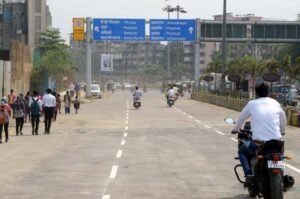
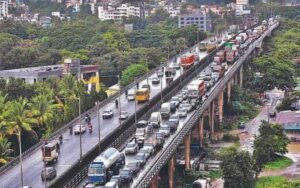
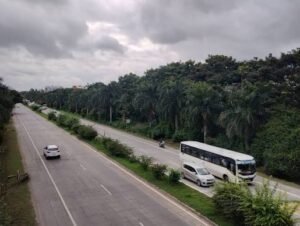
Gandhi Setu Bridge, officially known as Mahatma Gandhi Setu, is one of Bihar’s most important road bridges. It crosses the Ganga River between Patna and Hajipur and has served for decades as a vital connection between South Bihar and the large group of districts lying north of the river.
The bridge was inaugurated in 1982 and was built by Gammon India. The Government of India’s rehabilitation project records its length at 5.575 km, often rounded to about 5.6 km. For many years it was widely recognised as India’s longest river bridge and became one of the best-known infrastructure landmarks of Bihar.
After decades of heavy use, the original concrete superstructure suffered serious deterioration. A major rehabilitation programme replaced the damaged pre-stressed concrete superstructure with steel trusses while retaining the existing substructure. The fully rehabilitated bridge returned to four-lane operation in June 2022. As of August 2026, it remains operational, while a new four-lane bridge is being built parallel to it to add much-needed capacity on the Patna-Hajipur corridor.
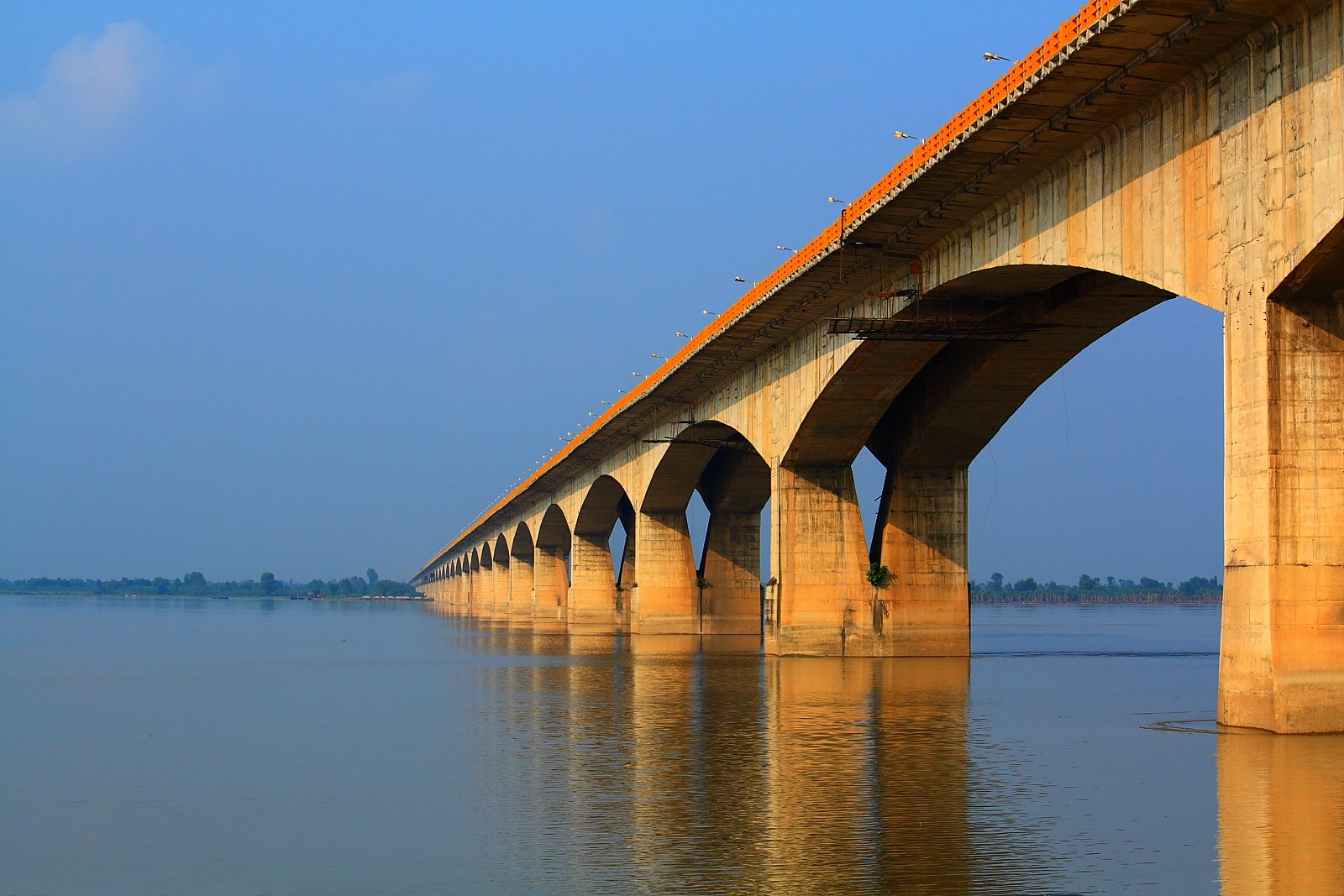
Quick Overview of Gandhi Setu Bridge
| Particular | Details |
| Official Name | Mahatma Gandhi Setu |
| Common Name | Gandhi Setu / Gandhi Setu Bridge |
| Location | Patna–Hajipur, Bihar |
| River | Ganga River |
| Approximate Length | 5.575 km (about 5.6 km) |
| Road Type | Four-lane road bridge |
| Opened | 1982 |
| Original Builder | Gammon India Limited |
| Main Connection | Patna and Hajipur |
| Major Regional Role | South Bihar–North Bihar connectivity |
| Current Structure | Rehabilitated steel-truss superstructure on existing substructure |
| Full Rehabilitation Completed | June 2022 |
| Nearby Areas | Gaighat, Patna City, Hajipur, Ramashish Chowk and Vaishali |
| Future Development | New four-lane parallel bridge under construction |
| Current Status | Operational |
Where is Gandhi Setu Bridge Located?
Mahatma Gandhi Setu crosses the Ganga between Patna on the southern bank and Hajipur in Vaishali district on the northern bank. The Patna-side approach lies around the Gaighat and Patna City belt, while the Hajipur side connects into the road network around Ramashish Chowk and central Hajipur.
Its location gives the bridge far greater importance than a normal city crossing. Patna is Bihar’s capital and principal administrative, medical, educational and commercial centre, while Hajipur is a major gateway to Vaishali, Muzaffarpur, Chhapra and other parts of North Bihar.
For many travellers coming from north of the Ganga, Gandhi Setu remains one of the most direct road approaches into eastern and central Patna.
Gandhi Setu Bridge Route and Road Connectivity
The bridge forms a key part of the Patna-Hajipur national highway corridor. Its approaches distribute traffic towards several important regional destinations.
- Patna City and Gaighat: Main urban approach on the Patna side.
- Hajipur: Principal town at the northern end of the bridge.
- Vaishali: Reached through the Hajipur road network.
- Muzaffarpur: Major North Bihar city for which the Hajipur route is important.
- Chhapra and Saran: Accessible through connecting roads from Hajipur.
- Samastipur and Darbhanga direction: Connected through the wider North Bihar highway system.
- Patna Bypass: Useful for vehicles heading towards eastern and southern parts of Patna.
- JP Ganga Path: Planned/direct connectivity improvements are being developed around Gaighat to better link the riverfront road with Gandhi Setu.
Why is Gandhi Setu Bridge Important?
Gandhi Setu has often been called a lifeline of Bihar because it links the state capital with the densely populated districts north of the Ganga. It supports passenger travel, bus services, goods movement, healthcare trips, education-related travel and long-distance regional traffic.
Before additional Ganga crossings were developed around Patna, an exceptionally large share of north-south traffic depended on this bridge. Even today, despite newer routes such as JP Setu and the partially opened Kachchi Dargah-Bidupur corridor, Gandhi Setu remains central to Patna-Hajipur movement.
The bridge is especially important for people travelling from Vaishali and Muzaffarpur districts into Patna for hospitals, government offices, railway connections, education and business.
Traffic Conditions at Gandhi Setu Bridge
Traffic on Gandhi Setu is much smoother than it was during the years when the old superstructure was under repair, but the corridor can still become heavily congested during peak travel periods. The bridge carries a mix of cars, buses, two-wheelers and commercial vehicles, while local traffic joins and leaves at the approaches.
Delays are more likely during weekday peaks, major festivals, exceptional crowd-control arrangements and incidents on alternative Ganga crossings. The Patna approach around Gaighat and the Hajipur approach around the main road junctions can be slower than the central river span itself.
The continuing need for a parallel four-lane bridge shows that the problem is now largely one of capacity rather than simply the structural condition of the rehabilitated Gandhi Setu.
Construction and History of Gandhi Setu
The bridge was built by Gammon India and inaugurated in 1982 by then Prime Minister Indira Gandhi. At the time, the enormous width of the Ganga and the length of the crossing made the project a major engineering achievement.
For decades, Gandhi Setu was widely known as India’s longest river bridge. More recent bridge projects have surpassed it, but its historical importance in Indian road engineering remains considerable.
The original bridge used a pre-stressed concrete cantilever superstructure. Heavy traffic, age and structural distress eventually made large-scale rehabilitation unavoidable.
Major Rehabilitation and Steel-Truss Transformation
In 2016, the Union Cabinet approved a major rehabilitation project for the 5.575-km bridge at an estimated cost of about ₹1,742 crore. The plan was unusual: instead of replacing the entire bridge, engineers retained the existing foundations and piers but dismantled the damaged concrete superstructure and replaced it with a steel-truss deck.
The work was executed in phases so that traffic could continue on one side while the other side was rebuilt. The rehabilitated western carriageway opened first, and the eastern carriageway followed. The fully rehabilitated four-lane bridge was inaugurated in June 2022.
This transformation gave Gandhi Setu a visibly different appearance. The long steel trusses now seen across the Ganga belong to the rehabilitation project rather than the original 1982 concrete superstructure.
New Parallel Gandhi Setu Bridge
A second four-lane bridge is being built parallel to the existing Mahatma Gandhi Setu. The project is intended to create eight-lane combined capacity across this important Patna-Hajipur corridor once both structures are in use.
The wider project includes substantial approach-road construction on both banks. Bihar government officials have repeatedly highlighted the project as important for smoother movement between Patna and districts such as Vaishali, Muzaffarpur and Saran.
The latest 2026 progress reporting available indicates that the new bridge is around 73% complete, with approach-road work also well advanced. The current target is completion by December 2026. Because the bridge is still under construction as of August 2026, travellers should not treat it as an operational alternative yet.
JP Ganga Path Connection
Another important change is the planned integration of Gandhi Setu with Patna’s JP Ganga Path, popularly known as the Marine Drive. Bihar authorities have been working on improved ramp connectivity around Gaighat so vehicles can move more directly between the riverfront road and Gandhi Setu.
When the parallel bridge is also completed, this interchange should become even more important. It is intended to distribute traffic between central Patna, eastern Patna, Hajipur and the wider North Bihar road system without forcing every vehicle through the same local streets.
Public Transport Near Gandhi Setu
Road-based public transport is extensive on both sides of Gandhi Setu. Buses, shared vehicles, autos, taxis and app-based cabs use the Patna-Hajipur corridor.
Hajipur Junction is the principal railway station on the northern side and serves as a major rail hub for North Bihar. On the Patna side, travellers can connect to Patna Junction, Rajendra Nagar Terminal, Patna Sahib and other railway stations through the city road network.
The bridge itself is a road-only crossing and does not carry railway tracks.
Major Landmarks and Facilities Near Gandhi Setu
- Gaighat: Major Patna-side riverfront and bridge approach area.
- Patna City: Historic eastern part of Patna with dense residential and commercial development.
- Takht Sri Harmandir Sahib, Patna Sahib: Major Sikh pilgrimage site accessible from the Patna City side.
- JP Ganga Path: Patna’s riverfront road corridor being linked more directly with Gandhi Setu.
- Hajipur: Major commercial and transport centre on the northern bank.
- Ramashish Chowk: Important Hajipur-side road junction used for onward movement.
Nearby Areas to Gandhi Setu Bridge
- Gaighat: Immediate Patna-side locality associated with the bridge approach.
- Patna City: Large urban area covering several historic and residential neighbourhoods east of central Patna.
- Agam Kuan: Important eastern Patna locality connected through nearby road corridors.
- Hajipur: Main city at the northern end of the bridge.
- Vaishali: District region north of Hajipur with major historical and tourism importance.
- Sonpur: Nearby town accessible through the Hajipur-side road network and other Ganga crossings.
FAQs About Gandhi Setu Bridge Patna
Q1. Is Gandhi Setu Bridge open to traffic now?
Yes. The rehabilitated Mahatma Gandhi Setu is operational as a four-lane road bridge. The separate parallel four-lane bridge remains under construction as of August 2026.
Q2. Is the new parallel Gandhi Setu already open?
No. The latest 2026 progress reports place the project at roughly 73% completion, with the current completion target set for December 2026.
Q3. Is Gandhi Setu still India’s longest bridge?
No. Gandhi Setu held the distinction of being India’s longest river bridge for many years, but several newer bridges are now longer. It remains one of Bihar’s most important and historically significant river crossings.
Q4. Was the entire old bridge demolished during rehabilitation?
No. The rehabilitation retained the usable substructure, including the foundations and piers, while the damaged concrete superstructure was dismantled and replaced with steel trusses.
Q5. Does Gandhi Setu connect directly with JP Ganga Path?
Connectivity at Gaighat is being improved so JP Ganga Path can link more efficiently with Gandhi Setu and the new parallel bridge. The objective is to reduce local traffic conflicts and make east-west and north-south movement easier.