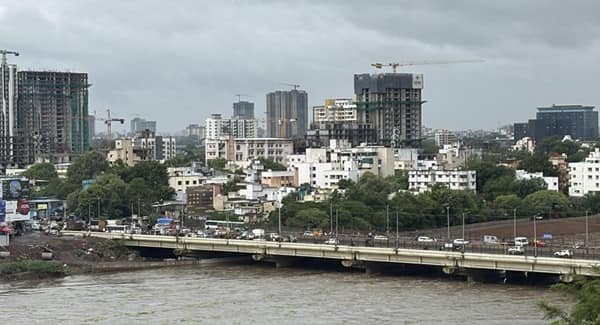
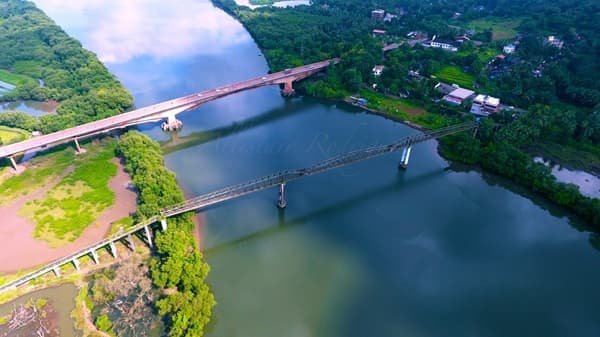
Dabholi Jahangirpura Bridge is an important four-lane road bridge across the Tapi River in Surat, Gujarat. Its official name is Dr. Shyama Prasad Mukherjee Bridge. It connects Dabholi on the eastern side of the river with Jahangirpura on the western side, creating a direct link between the Katargam-Dabholi belt and Jahangirpura, Rander and Adajan-side areas.
The bridge was inaugurated on 25 January 2011. Surat Municipal Corporation records show that the project was developed under JnNURM and includes a 1,075.7-metre river span, approach viaducts and ramps. When the full four-lane and additional two-lane ramp components are counted together, SMC gives a total constructed length of 1,973.177 metres.
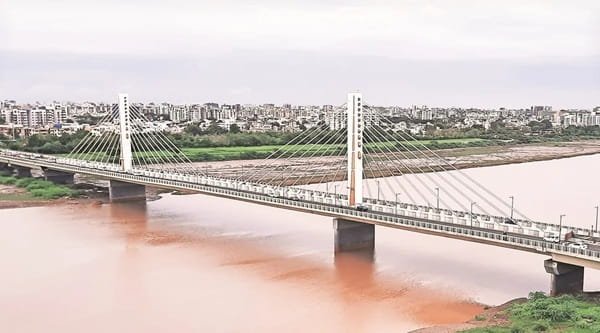
The crossing remains important to north Surat traffic and reduces dependence on longer routes through the central city. In 2026 it underwent major wearing-course and repair work, causing temporary closures and changes to BRTS services before traffic access was restored.
Quick Overview of Dabholi Jahangirpura Bridge
| Particular | Details |
| Official Name | Dr. Shyama Prasad Mukherjee Bridge |
| Common Name | Dabholi-Jahangirpura Bridge / Jahangirpura-Dabholi Bridge |
| Location | Surat, Gujarat |
| River | Tapi River |
| Connects | Dabholi and Jahangirpura |
| Bridge Type | High-level prestressed concrete road bridge |
| Main Roadway | Four lanes – two lanes in each direction |
| River Span Length | 1,075.70 metres |
| Total Project Length | 1,973.177 metres including approaches and additional ramp section |
| Main Bridge Width | 21.70 metres |
| Opened | 25 January 2011 |
| Project Agency | Surat Municipal Corporation |
| Funding | JnNURM |
| Reported SMC Project Cost | Rs. 69.33 crore |
| Nearby Areas | Dabholi, Singanpor, Katargam, Jahangirpura, Rander and Adajan |
| Current Status | Operational after 2026 repair work |
| Known For | Direct east-west connection across the Tapi in north Surat |
Where is Dabholi Jahangirpura Bridge Located?
The bridge crosses the Tapi River in the northern part of Surat. Surat Municipal Corporation places the Jahangirpura end near the intake-well area, while the Dabholi end is near the Torrent Power electric substation. This alignment allows traffic to move directly between the two sides of north Surat without first travelling into the denser central river crossings.
On the eastern side, the bridge serves Dabholi, Singanpor, Katargam, Ved Road and adjoining neighbourhoods. On the western side, it opens into Jahangirpura and provides onward access towards Rander, Adajan, Palanpur and other western Surat localities.
Dabholi Jahangirpura Bridge Route and Road Connectivity
The bridge is particularly useful for east-west movement across the Tapi. It was planned to connect expanding residential areas on both sides of the river and reduce dependence on longer routes through central Surat.
- Dabholi: Main eastern approach locality and a dense residential part of north Surat.
- Singanpor: Important locality adjoining the Dabholi-Katargam side of the bridge.
- Katargam: Major residential and commercial area that benefits from direct access towards Jahangirpura and Rander.
- Ved Road: Important north Surat road corridor connected through the Dabholi-Katargam network.
- Jahangirpura: Principal western approach locality and one of the bridge’s namesake areas.
- Rander: Historic and densely developed locality accessible from the Jahangirpura side.
- Adajan: Major western Surat residential and commercial area reached through the Rander-Jahangirpura road network.
Why is Dabholi Jahangirpura Bridge Important?
When the bridge opened in 2011, contemporary reporting said it would benefit roughly seven lakh people. Its biggest advantage was the direct connection between Varachha, Katargam and Dabholi on one side and Jahangirpura, Rander and Adajan on the other.
Before this link, many journeys required substantially longer movement through city traffic. Inauguration-era estimates suggested some trips that had taken 45 to 60 minutes could be reduced to around 5 to 10 minutes under favourable traffic conditions.
The bridge also gives Surat another high-level crossing of the Tapi. This is useful during monsoon periods when the lower weir-cum-causeway route may be restricted because of high river flow.
Traffic Conditions at Dabholi Jahangirpura Bridge
Traffic on the bridge is mainly urban commuter traffic. Two-wheelers, cars, buses and other vehicles use it to move between the Katargam-Dabholi side and the Jahangirpura-Rander side. Peak-hour delays are more likely near the approach junctions than over the central river span.
Traffic usually becomes heavier during morning and evening commuting periods, major festivals, road works and diversions from other Tapi crossings. Because it is a convenient cross-river link, closures can quickly shift traffic to nearby bridges.
2026 Repair Work and Temporary Closure
One of the most important recent developments was a major maintenance programme in early 2026. Surat Municipal Corporation undertook repair work on the wearing course and other bridge components. A planned 78-day traffic restriction began on 11 February and was scheduled to continue until 30 April 2026.
The closure also forced temporary changes to Surat Citylink and BRTS services, including Routes 13 and 14. Local updates in late April reported reopening after the repair programme. As of August 2026, current driving services again list Dabholi-Jahangirpura Bridge as an active route.
Engineering and Design of the Bridge
Surat Municipal Corporation publishes unusually detailed engineering information for this bridge. The river portion consists of 31 spans of 34.70 metres each, producing a river-span length of 1,075.70 metres. The main bridge is 21.70 metres wide and carries two lanes in each direction.
The river section uses 1,500-mm-diameter pile foundations, RCC solid piers and a cast-in-situ prestressed box-girder superstructure. SMC classifies it as a high-level bridge and records the technical project cost at Rs. 69.33 crore.
Public Transport Near Dabholi Jahangirpura Bridge
Surat Citylink buses and BRTS services operate through the surrounding Jahangirpura, Dabholi, Katargam and western Surat road network. The importance of these services was evident during the 2026 bridge repairs, when SMC had to revise Route 13 and Route 14 and introduce special arrangements for passengers.
SMC’s Surat Sitilink app provides route search, nearby stops, fares and estimated arrival times. Auto-rickshaws, taxis and app-based cabs are also widely available.
Major Landmarks and Facilities Near the Bridge
Jahangirpura Intake-Well Area: SMC identifies this as the official reference point for the western bridge approach.
Torrent Power Substation, Dabholi Side: Official SMC project information uses this as the reference point for the eastern end.
ISKCON Temple, Jahangirpura: One of the best-known religious landmarks in the wider Jahangirpura area.
Rander and Adajan: Major western Surat areas reached through the Jahangirpura road network.
Nearby Areas to Dabholi Jahangirpura Bridge
Dabholi: The principal eastern-side locality and one of the two areas directly linked by the bridge.
Jahangirpura: The main western-side locality and a rapidly developed residential part of Surat.
Singanpor: Neighbourhood close to the Dabholi approach with access towards Katargam and Ved Road.
Katargam: Large north Surat locality benefiting from the shorter cross-river connection.
Rander: Historic locality west of the Tapi and an important route towards Adajan.
Adajan: Major western Surat area accessible through the Jahangirpura-Rander network.
FAQs About Dabholi Jahangirpura Bridge Surat
Q. What is the official name of Dabholi Jahangirpura Bridge?
Its official name is Dr. Shyama Prasad Mukherjee Bridge. Surat Municipal Corporation uses this name for the four-lane Tapi bridge connecting Dabholi Village with Jahangirpura.
Q. Is Dabholi Jahangirpura Bridge open after the 2026 repairs?
Yes. The major 2026 wearing-course repair programme involved temporary restrictions from February into late April. Local reports recorded reopening after the repair period, and the bridge is currently treated as an active road connection.
Q. Does the bridge have four lanes throughout?
The main bridge across the river carries two lanes in each direction and is 21.70 metres wide. The Jahangirpura approach also includes an additional two-lane ramp, which is why SMC separately records four-lane and two-lane portions in the total project length.
Q. Can pedestrians use Dabholi Jahangirpura Bridge?
SMC engineering drawings show 2-metre footpaths on the main river section. Pedestrians should nevertheless use the designated walkway and avoid stopping in the vehicle carriageway.
Q. Is there a toll for crossing the bridge?
It functions as an urban Surat Municipal Corporation road bridge. No regular standalone toll plaza is associated with normal use of the Dabholi-Jahangirpura crossing.