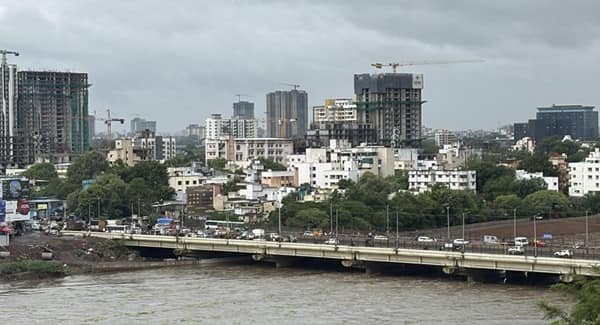
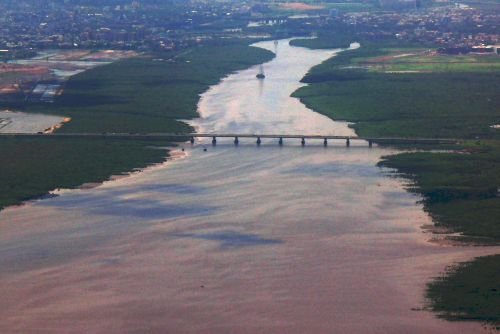
Airoli Bridge, widely known as the Mulund-Airoli Bridge, is one of the most important road links between Mumbai and Navi Mumbai. Built across Thane Creek, it connects Mulund in Mumbai’s eastern suburbs with Airoli in Navi Mumbai and provides direct access between the Eastern Express Highway side and the Thane-Belapur Road corridor. The bridge is particularly useful for commuters travelling to Airoli’s major IT and business districts, Rabale, Ghansoli and other parts of Navi Mumbai.
Completed in 1999, the bridge was constructed by Afcons Infrastructure. Shapoorji Pallonji describes the main bridge as approximately 1.87 km long and notes that the project used monolithically cast 800-tonne box girders, a technique being used for the first time in India at that scale.
The bridge continues to carry heavy daily traffic. An MMRDA traffic study cited in June 2026 estimated that around 30,000 vehicles use the Airoli-Mulund Creek Bridge each day. Its importance is expected to increase further with the Airoli-Katai Naka Corridor and Goregaon-Mulund Link Road projects.
Quick Overview of Airoli Bridge
| Particular | Details |
| Name | Airoli Bridge |
| Common Name | Mulund-Airoli Bridge |
| Location | Mumbai–Navi Mumbai, Maharashtra |
| Crosses | Thane Creek |
| Connects | Mulund and Airoli |
| Bridge Type | Road bridge |
| Main Bridge Length | About 1.87 km |
| Completed | 1999 |
| Builder | Afcons Infrastructure |
| Mumbai-Side Connection | Eastern Express Highway/Mulund |
| Navi Mumbai-Side Connection | Thane-Belapur Road/Airoli |
| Nearby Areas | Mulund, Airoli, Digha, Rabale and Ghansoli |
| Approx. Daily Traffic | Around 30,000 vehicles in MMRDA traffic study |
| Light Vehicle Toll | Exempt since October 2024 |
| Major Upcoming Link | Airoli-Katai Naka Corridor |
| Known For | Direct Mumbai–Navi Mumbai road connectivity |
Shapoorji Pallonji gives the bridge length as 1.87 km. Longer figures sometimes quoted in general references may include larger approach-road sections rather than only the principal creek bridge structure.
Where is Airoli Bridge Located?
Airoli Bridge crosses Thane Creek between Mulund and Airoli. On the Mumbai side, the approach connects with the road network serving Mulund and the Eastern Express Highway. On the Navi Mumbai side, the bridge reaches Airoli and connects with the Thane-Belapur Road, one of Navi Mumbai’s most important north-south corridors.
The location makes the bridge especially valuable for people travelling between Mumbai’s eastern suburbs and employment zones in Navi Mumbai. Airoli has developed into a major commercial centre, with Mindspace Airoli East alone describing itself as a large integrated IT and business park located on Thane-Belapur Road close to Airoli railway station.
The bridge also acts as one of Mumbai’s recognised entry and exit points, alongside crossings and toll-entry corridors such as Vashi, Dahisar and Mulund.
Airoli Bridge Route and Road Connectivity
Airoli Bridge provides a convenient route for motorists travelling between eastern Mumbai and Navi Mumbai without having to go through central Thane or use the Vashi crossing.
Important route connections include:
- Mulund: The main Mumbai-side suburb connected by the bridge.
- Eastern Express Highway: Provides onward access towards Bhandup, Vikhroli, Ghatkopar, Sion and South Mumbai.
- Airoli: Major residential and employment centre immediately after the Navi Mumbai end.
- Thane-Belapur Road: Important corridor connecting Airoli with Rabale, Ghansoli, Kopar Khairane, Turbhe and other Navi Mumbai nodes.
- Rabale: Major industrial and employment area south of Airoli.
- Ghansoli: Residential and commercial node farther along Thane-Belapur Road.
- Digha: Navi Mumbai locality close to the Airoli-Thane side.
- Thane: Accessible through local road connections from Airoli and Digha.
The bridge is particularly useful for employees commuting from Mulund, Bhandup and other eastern Mumbai suburbs to the Airoli-Thane-Belapur IT corridor. Mindspace notes that its Airoli business park has strong road connectivity with Mulund, Thane and other parts of Navi Mumbai.
Why is Airoli Bridge Important?
Before Airoli Bridge opened, motorists travelling between Mulund and Navi Mumbai had fewer direct options across Thane Creek. The 1999 bridge created a much more convenient connection between Mumbai’s Eastern Express Highway side and Navi Mumbai’s developing commercial belt.
Today, its importance comes from several types of traffic:
- Daily office commuters
- IT and corporate employees
- Local residents
- Buses and taxis
- Commercial vehicles
- Traffic travelling towards Navi Mumbai
- Vehicles continuing towards Kalyan-Dombivli and the wider Thane region
The bridge also reduces dependence on the Vashi route for travellers whose destinations are in northern Navi Mumbai. This is particularly useful for Airoli, Rabale and Ghansoli rather than areas farther south such as Nerul or Belapur.
MMRDA studies cited in 2026 estimated roughly 30,000 vehicles a day on the Mulund-Airoli crossing, demonstrating its continuing importance nearly three decades after opening.
Traffic Conditions at Airoli Bridge
Traffic can become heavy on Airoli Bridge during weekday morning and evening office hours.
The busiest movements typically involve vehicles heading from Mumbai towards Airoli in the morning and returning towards Mulund later in the day, although traffic can build in either direction depending on conditions across the wider road network.
Congestion is often influenced by:
- Heavy office-hour traffic
- Queues near the Airoli entry/exit area
- Thane-Belapur Road congestion
- Roadworks and construction activity
- Monsoon road conditions
- Vehicle breakdowns
- Traffic approaching the Eastern Express Highway
- Construction connected with new regional road projects
MMRDA’s 2026 assessment noted that commuters using the Airoli-Mulund and Kalwa creek crossings can face significant peak-hour delays, with congestion in the wider network occasionally stretching journeys by close to an hour.
Temporary restrictions have also been required during major construction. For example, night traffic restrictions were imposed on the Mulund-Airoli Bridge in February 2025 for girder-launching work associated with infrastructure on the Airoli side.
Construction and Engineering of Airoli Bridge
Airoli Bridge was completed in 1999 and constructed by Afcons Infrastructure.
According to Shapoorji Pallonji, the project stretches approximately 1.87 km across Thane Creek and was notable for using monolithically cast 800-tonne box girders. The company states that this construction technique was used for the first time in India on the project.
The bridge helped support the rapid development of Airoli and the Thane-Belapur commercial corridor by providing a direct connection with Mumbai.
Unlike the newer Atal Setu, Airoli Bridge is designed primarily as a metropolitan commuter connection rather than a long-distance expressway crossing. Its strength is its position: it links two heavily developed urban areas separated by the creek.
Toll Charges at Airoli Bridge
Airoli Bridge historically formed part of Mumbai’s toll-entry system.
However, the Maharashtra government introduced a major change in October 2024, when toll charges at Mumbai’s five entry points were waived for light motor vehicles, school buses and Maharashtra State Transport buses. Airoli Bridge was specifically included in this exemption.
Therefore, as of August 2026, cars and other eligible light motor vehicles do not pay the earlier Mumbai entry toll at Airoli.
The exemption does not automatically mean that every class of vehicle is toll-free. Commercial and heavier vehicles remain subject to the applicable toll rules unless separately exempted.
Airoli-Katai Naka Corridor and the Bridge
One of the biggest upcoming changes around Airoli Bridge is the Airoli-Katai Naka Corridor.
The approximately 12.7-km project is being developed to create a faster road connection from Airoli through Mumbra towards Katai Naka, Kalyan-Dombivli and Badlapur. It combines elevated roads and twin tunnels through the Parsik Hills.
Importantly, the new road is designed to integrate directly with the Airoli end of the Mulund-Airoli Bridge.
As of May 2026:
- The approximately 57-km elevated Airoli–Thane-Belapur Road section was structurally complete.
- The section continuing through the Parsik Hills towards Mumbra was in an advanced stage.
- MMRDA was targeting the first two sections for opening by the end of 2026.
- The final Mumbra–Katai Naka elevated section was targeted for completion later, around 2028.
Once fully operational, the corridor is expected to reduce travel time between Airoli and the Kalyan-Dombivli side by roughly 35–40 minutes on suitable journeys.
Goregaon-Mulund Link Road and Future Traffic
Airoli Bridge will also become more important because of the Goregaon-Mulund Link Road (GMLR).
The GMLR is being developed to create a much faster east-west connection across Mumbai between the Western Express Highway side and Mulund. A further 1.3-km flyover linking the Eastern Express Highway towards Airoli is part of the wider scheme. In March 2026, BMC records put the contract for this section at approximately ₹1,389 crore, with construction planned over 36 months excluding monsoon periods.
When this network is eventually completed, motorists travelling from western Mumbai towards Navi Mumbai will have a more direct route:
Goregaon → Mulund → Airoli Bridge → Navi Mumbai.
This could increase traffic demand on the existing Airoli crossing, which is one reason additional creek-crossing capacity is being planned.
Proposed New Thane-Airoli Creek Bridge
A separate new bridge between Thane and Airoli is also moving forward, but it should not be confused with replacement of the existing Mulund-Airoli Bridge.
In June 2026, MMRDA invited bids for a proposed 1.4-km, six-lane cable-stayed bridge between Kopri in Thane East and Patni near Airoli. The estimated project cost was ₹723.42 crore.
The proposed bridge is intended to provide another Thane Creek crossing and relieve congestion on both the existing Airoli-Mulund and Kalwa routes. If construction follows the tender schedule, it is expected to become operational around 2030.
It is therefore an additional regional bridge, not a reconstruction of Airoli Bridge.
Public Transport Near Airoli Bridge
Airoli has strong public-transport connectivity.
Airoli railway station is on Central Railway’s Trans-Harbour suburban line, which connects the area with Thane and Navi Mumbai stations including Rabale, Ghansoli, Kopar Khairane and Turbhe. Central Railway continues to operate Trans-Harbour services through Airoli in 2026.
Road-based options include:
- NMMT buses
- BEST services on selected routes
- Auto-rickshaws
- Taxis
- App-based cabs
- Private employee buses
Airoli station is especially convenient for employees working in the Thane-Belapur Road business district. Mindspace Airoli East specifically highlights its proximity to Airoli railway station and strong road/public-transport access.
Major Landmarks and Facilities Near Airoli Bridge
Important landmarks around the bridge include:
- Eastern Express Highway
- Thane-Belapur Road
- Airoli Railway Station
- Mindspace Airoli East
- Airoli Knowledge Park
- Rabale MIDC
- Digha
- Mulund East
- Thane Creek and surrounding mangrove areas
Airoli’s development as a large IT and commercial centre has made the bridge an important daily commuter route rather than merely a physical crossing between two cities.
Nearby Areas to Airoli Bridge
- Airoli: The principal Navi Mumbai node directly connected by the bridge.
- Mulund: Major Mumbai suburb at the western end of the crossing, with access to the Eastern Express Highway.
- Digha: Navi Mumbai locality north of Airoli and close to the Thane side.
- Rabale: Important industrial and employment area south of Airoli.
- Ghansoli: Major residential and commercial Navi Mumbai node farther along Thane-Belapur Road.
- Bhandup: Mumbai suburb accessible through the Eastern Express Highway and local Mulund roads.
- Thane: Major city accessible from both the Airoli-Digha side and the wider regional road network.
FAQs About Airoli Bridge Mumbai
Q1. Is there currently a toll for cars on Airoli Bridge?
No. Since October 2024, eligible light motor vehicles have been exempt from Mumbai entry tolls at Airoli Bridge. The exemption also covers school buses and Maharashtra State Transport buses.
Q2. Is Airoli Bridge the same as Vashi Bridge?
No. Both cross Thane Creek and connect Mumbai with Navi Mumbai, but they serve different areas. Airoli Bridge connects Mulund with Airoli, while Vashi Bridge connects the Mankhurd side of Mumbai with Vashi.
Q3. Will the Airoli-Katai Naka road connect directly with Airoli Bridge?
Yes. The new corridor is designed to begin from the Airoli end of the Mulund-Airoli Bridge, providing onward elevated connectivity towards Thane-Belapur Road, Mumbra and eventually Katai Naka.
Q4. Is the proposed Thane-Airoli bridge a replacement for Airoli Bridge?
No. MMRDA’s proposed Thane-Airoli bridge is a separate new crossing between Kopri and the Patni/Airoli side. It is intended to add road capacity and reduce pressure on existing bridges.
Q5. Why do some websites show different lengths for Airoli Bridge?
Different figures can result from whether a source measures only the main creek bridge or includes longer approach and connecting sections. The project page of Shapoorji Pallonji, whose group company Afcons built the bridge, gives the principal Airoli Bridge length as 1.87 km.