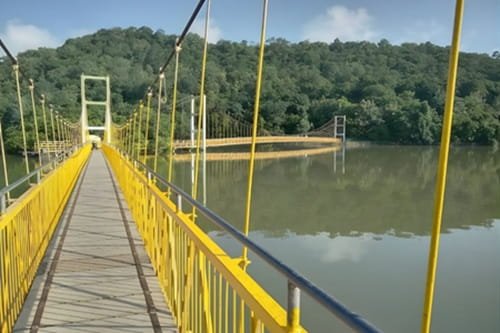
Laknavaram Bridge, better known as the Laknavaram Hanging Bridge or Laknavaram Suspension Bridge, is the signature visitor attraction at Laknavaram Lake in Mulugu district, Telangana. The pedestrian bridge stretches over the lake towards its small islands, giving visitors elevated views of water, forested hills and the island tourism facilities developed around the reservoir.
The best-known hanging bridge is widely reported to be about 160 metres long. It is a pedestrian structure rather than a road bridge, so its main role is to connect visitors with the island area while creating a distinctive sightseeing experience. The Mulugu district administration officially describes the suspension bridge as an added attraction at Laknavaram Lake and states that it takes visitors to a mini island.
Laknavaram itself is much older than the bridge. The lake dates to the Kakatiya period and was developed as an irrigation reservoir by using the surrounding hills and bunds to hold water. Modern tourism infrastructure – including the suspension bridge, boating and island accommodation – has transformed the historic reservoir into one of the best-known nature destinations in the Warangal-Mulugu region.
Quick Overview of Laknavaram Bridge
| Particular | Details |
| Name | Laknavaram Bridge / Laknavaram Hanging Bridge |
| Location | Laknavaram Lake, Govindaraopet Mandal, Mulugu district, Telangana |
| Waterbody | Laknavaram Lake |
| Bridge Type | Pedestrian suspension bridge |
| Approx. Length | About 160 metres for the best-known main hanging bridge |
| Vehicle Traffic | Not a normal car or bus bridge |
| Main Purpose | Visitor and island connectivity |
| Nearby Town | Mulugu |
| Distance from Warangal | About 70 km by official district information |
| Distance from Hyderabad | About 210 km via Warangal by official district information |
| Nearby Attraction | Ramappa Temple |
| Activities | Bridge walk, boating, photography and lake sightseeing |
| Accommodation | Telangana Tourism Laknavaram Hotel / island accommodation |
| Current Status | Listed as an active tourist attraction by Mulugu district in August 2026 |
| Known For | Hanging bridge, islands, forested hills and lake views |
Where is Laknavaram Bridge Located?
Laknavaram Bridge is located at Laknavaram Lake in Govindaraopet Mandal of Mulugu district, Telangana. The official Mulugu district tourism page places the lake about 70 km from Warangal and describes it as easily accessible by road. Hyderabad is about 210 km away via Warangal according to the same district source.
The bridge is inside the lake tourism area rather than on a public highway. Visitors first reach the Laknavaram Lake entrance and then walk towards the suspension-bridge section. The surrounding landscape is rural and forested, which is part of the attraction but also means the final approach is very different from an urban bridge visit.
Mulugu town is the main nearby district centre. Ramappa Temple, another major attraction in Mulugu district, can be combined with Laknavaram on the same regional itinerary.
Laknavaram Bridge Route and Road Connectivity
The bridge itself is pedestrian-only, so route planning is mainly about reaching Laknavaram Lake by road. From Warangal-Hanamkonda, travellers generally head towards Mulugu and Govindaraopet before taking the local road to the lake tourism complex.
A practical route is broadly: Warangal / Hanamkonda -> Mulugu -> Govindaraopet side -> Laknavaram Lake -> Hanging Bridge.
- Mulugu: Main nearby district town and an important road reference for the lake.
- Govindaraopet: Mandal in which Laknavaram Lake is located.
- Warangal / Hanamkonda: Main urban and railway gateway for many visitors.
- Ramappa Temple: UNESCO World Heritage temple complex in the wider Mulugu tourism circuit.
- Tadvai: Forested Mulugu-area destination accessible through the regional road network.
- Eturnagaram side: Important forest and wildlife tourism direction farther east in Mulugu district.
Why is Laknavaram Bridge Important?
Laknavaram Bridge is important mainly as tourism infrastructure. It allows visitors to move over the lake rather than simply viewing the reservoir from the bank, creating direct access towards island areas and giving the destination its most recognisable visual feature.
The bridge has also helped turn Laknavaram from a historic irrigation reservoir into a wider tourism destination. Visitors now combine the bridge walk with boating, lake views, photography and stays in Telangana Tourism accommodation.
Its value is therefore different from a highway or railway bridge. Laknavaram Bridge is primarily about pedestrian access, recreation and the visual experience of the lake landscape.
Traffic and Visitor Conditions at Laknavaram Bridge
There is no normal car, bus or truck traffic on the hanging bridge. The relevant ‘traffic’ is pedestrian movement, particularly during weekends, public holidays and the popular post-monsoon travel season.
The narrow deck can feel crowded when large groups arrive together, especially near the most popular photography points. Visitors should keep moving where possible, avoid blocking the walkway and follow any instructions from tourism staff regarding numbers or access.
The official Mulugu district tourism page, updated in August 2026, continues to list the suspension bridge and boating as Laknavaram attractions. This supports treating the bridge as an active tourist facility, although day-specific restrictions can still occur during maintenance or difficult weather.
Bridge Design and Island Connectivity
Laknavaram’s best-known structure is a suspension footbridge, with the deck carried by vertical hangers connected to main suspension cables. The design allows a relatively light pedestrian crossing over the water without the heavy deck and wide carriageway required for motor traffic.
Multiple travel sources give the main bridge length as about 160 metres. The official district page does not publish an engineering length but confirms that the hanging bridge carries visitors towards a mini island. Other tourism descriptions refer to a wider network of bridge-connected island areas within the lake.
This island setting is what makes Laknavaram unusual. The bridge is not simply a straight crossing from one urban bank to another; it forms part of a recreational landscape where islands, water and wooded hills are the main experience.
Laknavaram Lake and Kakatiya History
The lake is historically older than the modern suspension bridge. Mulugu district administration states that Laknavaram was developed during the Kakatiya period in the 13th century. The natural hills formed barriers around the water, while short bunds across narrow valleys helped create the reservoir.
The lake later continued to serve irrigation needs in the surrounding region. Modern tourism development added the hanging bridge, boating and accommodation without changing the fact that Laknavaram began as a water-management landscape rather than as a purpose-built tourist lake.
This distinction is important because some travel descriptions can make it sound as though the Kakatiyas built the present suspension bridge. They did not; the historic element is the lake, while the hanging bridge is modern tourism infrastructure.
Current Tourism Facilities at Laknavaram
Laknavaram is more than a bridge-only stop. The official district page specifically mentions boating, while Telangana Tourism continues to list Laknavaram accommodation through its tourism hotel network.
Visitors commonly combine the bridge walk with boating and time around the lakefront. Island accommodation is also available through Telangana Tourism, making an overnight stay possible for travellers who want to experience the quieter morning or evening atmosphere.
A current 2026 Warangal tourism listing gives general lake visitor hours around 8:00 AM to 5:30 PM on most days, with longer Sunday hours, but these timings are not published on the Mulugu district page. Visitors should therefore treat them as indicative and check locally before a time-sensitive trip.
Best Time to Visit Laknavaram Bridge
Laknavaram is usually most scenic during and after the monsoon when the reservoir has more water and the surrounding vegetation is greener. Winter also offers more comfortable daytime conditions for walking and sightseeing.
For photography, morning and late-afternoon light generally gives better views than harsh midday sun. Weekday visits can also be more comfortable for people who want a quieter bridge walk.
Heavy rain can change lake conditions quickly, so visitors travelling during the monsoon should check local weather and tourism access before setting out.
Public Transport Near Laknavaram Bridge
Laknavaram is a rural tourism destination, so private cars, taxis and hired vehicles are generally the most convenient way to reach the lake. The official district page identifies Warangal as the main railway gateway and notes that the lake is accessible by road from Warangal.
Warangal Junction is well connected to major Indian cities. From Warangal, travellers need road transport for the remaining journey towards Mulugu, Govindaraopet and Laknavaram.
Local buses can help with travel towards Mulugu and nearby mandal centres, but a direct door-to-door tourist connection to the bridge should not be assumed for every schedule.
Major Landmarks and Attractions Near Laknavaram Bridge
- Laknavaram Lake: The historic Kakatiya-period reservoir surrounding the bridge.
- Laknavaram islands: Small island areas that form part of the bridge and boating experience.
- Telangana Tourism Laknavaram Hotel: Tourism accommodation available at the lake.
- Ramappa Temple: Major heritage attraction that can be combined with Laknavaram.
- Ramappa Lake: Another scenic waterbody in the Mulugu tourism region.
- Tadvai forest area: Nature-oriented destination in the wider Mulugu district.
Nearby Areas to Laknavaram Bridge
- Laknavaram: Immediate lake and tourism area around the bridge.
- Govindaraopet: Mandal headquarters area serving the lake region.
- Mulugu: Main district town and road hub.
- Palampet: Village associated with Ramappa Temple and the wider heritage circuit.
- Tadvai: Forested locality in eastern Mulugu district.
- Warangal: Major nearby city and railway gateway for the destination.
FAQs About Laknavaram Bridge
Q1. Can cars or motorcycles cross Laknavaram Hanging Bridge?
No. The famous Laknavaram suspension bridge is a pedestrian tourism bridge, not a vehicular road crossing.
Q2. Is the hanging bridge itself from the Kakatiya period?
No. The lake has Kakatiya-era origins, but the present suspension bridge is modern tourism infrastructure.
Q3. Is the bridge open to visitors in 2026?
The Mulugu district administration was still listing the suspension bridge as an active Laknavaram attraction in its page updated on August 11, 2026. Day-specific maintenance or weather restrictions can still occur.
Q4. Does the bridge have a separate toll?
It is not a highway toll bridge. Access forms part of the Laknavaram tourist area, where entry, parking or activity charges may apply separately.
Q5. Can Laknavaram Bridge and Ramappa Temple be visited on the same trip?
Yes. Both are in the wider Mulugu-Warangal tourism circuit and are commonly combined in a day or overnight itinerary.
Q6. Is boating available near the bridge?
Yes. The Mulugu district administration specifically lists boating as an activity at Laknavaram Lake.
Q7. Why is Laknavaram Bridge sometimes called a hanging bridge and sometimes a suspension bridge?
Both names refer to the same general structural idea in popular usage. Technically it is a pedestrian suspension bridge, while “hanging bridge” is the common tourism name.