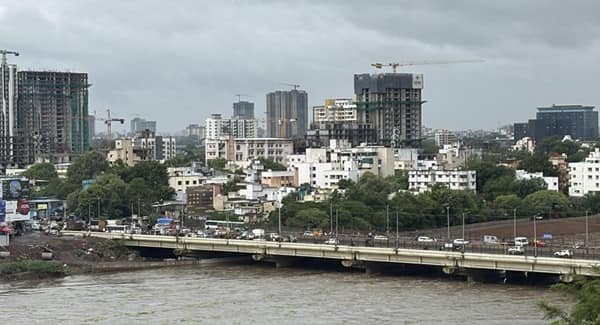
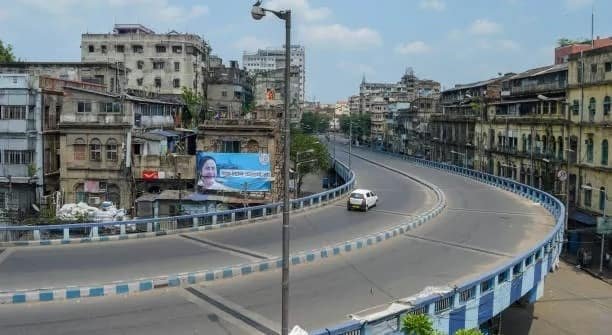
Dunlop Bridge, officially known as the Shahid Bhagat Singh Flyover, is an important road flyover at Dunlop Crossing in the northern part of the Kolkata metropolitan area. Located around Baranagar, it connects the Dakshineswar-side PWD Road with Barrackpore Trunk Road, better known as BT Road, and helps vehicles move towards Kolkata without passing through all the surface-level traffic at Dunlop Crossing.
The approximately 600-metre-long flyover opened to traffic in October 2012. Its construction was particularly important because Dunlop Crossing is where several major roads and transport routes converge. BT Road carries traffic between Kolkata and its northern suburbs, while nearby roads provide access towards Dakshineswar, Belgharia, Howrah and the Belgharia Expressway.
Dunlop is also unusual because road, Metro and suburban railway connections are concentrated within a relatively small area. Baranagar Metro Station and Baranagar Road railway station are close to the junction, making Dunlop an important multimodal transport point in North Kolkata.

Quick Overview of Dunlop Bridge
| Particular | Details |
| Official Name | Shahid Bhagat Singh Flyover |
| Common Name | Dunlop Bridge / Dunlop Flyover |
| Location | Dunlop, Baranagar, Kolkata Metropolitan Area |
| Structure Type | Urban road flyover |
| Approximate Length | 600 metres |
| Opened to Traffic | October 8, 2012 |
| Major Road | Barrackpore Trunk Road (BT Road) |
| Major Connection | PWD Road towards Dakshineswar |
| Important Junction | Dunlop Crossing |
| Nearby Areas | Baranagar, Bonhooghly, Belgharia, Dakshineswar and Alambazar |
| Towards Central Kolkata | Sinthee, Chitpur, Tala and Shyambazar |
| Towards Northern Suburbs | Belgharia, Kamarhati, Sodepur and Barrackpore |
| Nearby Metro | Baranagar Metro Station |
| Nearby Railway Station | Baranagar Road |
| Known For | Major BT Road junction and North Kolkata commuter connection |
The flyover was built primarily to help vehicles approaching from Dakshineswar and PWD Road join the Kolkata-bound side of BT Road without interrupting north-south traffic at the main intersection.
Where is Dunlop Bridge Located?
Dunlop Bridge is located at Dunlop Crossing in Baranagar, on the northern fringe of Kolkata. The junction sits on BT Road, an important arterial road connecting Kolkata with northern suburban areas extending towards Barrackpore.
Dunlop Crossing brings together BT Road, PWD Road and other local road connections. The wider area also provides access towards the Belgharia Expressway, which links the Dakshineswar side with the airport corridor and national highways beyond the Hooghly River.
The bridge is therefore not an isolated flyover. It forms part of a much larger transport junction serving travellers moving between Kolkata, North 24 Parganas, Howrah and Hooghly.
Dakshineswar lies immediately west of the wider Dunlop-Baranagar belt, while Belgharia and Kamarhati are located towards the north.
Dunlop Bridge Route and Road Connectivity
The main function of Dunlop Bridge is to simplify traffic movement around the busy BT Road junction.
Important road connections include:
- BT Road: The principal north-south arterial road through Dunlop, connecting Kolkata with Baranagar, Belgharia, Kamarhati, Sodepur and Barrackpore.
- Dakshineswar: Vehicles approaching from Dakshineswar use PWD Road towards Dunlop.
- Shyambazar: Kolkata-bound traffic continues south along BT Road towards Tala, Chitpur and Shyambazar.
- Belgharia: Located immediately north of the Dunlop-Baranagar area.
- Barrackpore: Reached by continuing north through the BT Road corridor.
- Nivedita Setu: Accessible through the Dakshineswar and Belgharia Expressway road network.
- Howrah and Hooghly: Connections across the Hooghly become accessible through the Nivedita Setu/Dakshineswar corridor.
- Kolkata Airport: Accessible through the Belgharia Expressway and onward connections towards Jessore Road.
The flyover was specifically designed to remove one important turning movement from the surface junction. Vehicles from the Dakshineswar side heading towards Kolkata could use the elevated route instead of repeatedly interrupting the main BT Road traffic stream.
Why is Dunlop Bridge Important?
Dunlop Bridge is important because Dunlop Crossing is one of the key gateways between Kolkata and the northern suburbs.
BT Road itself carries a large amount of bus, car, two-wheeler and commercial traffic. The junction also receives vehicles from Dakshineswar and roads leading towards Howrah and Hooghly.
Before the flyover opened, these different traffic streams had to interact largely at road level. Traffic signals repeatedly stopped the north-south BT Road movement to allow vehicles from PWD Road to enter or cross the junction. The flyover removed one of these major conflicts.
Its importance is particularly noticeable whenever it is closed for repairs. Past closures forced vehicles back through the surface junction and resulted in concerns about severe congestion, especially during office hours and festival periods.
Traffic Conditions at Dunlop Bridge
Dunlop remains a busy traffic zone despite the presence of the flyover.
Morning and evening office hours can bring substantial traffic along BT Road, particularly from commuters travelling between Kolkata and Baranagar, Belgharia, Sodepur and other northern suburbs.
Traffic pressure can also increase because Dunlop sits close to several other major corridors. Problems on the Belgharia Expressway, nearby railway flyovers or northern suburban roads can quickly affect BT Road.
This was demonstrated again in early 2026 when structural repairs required closure of the nearby Belgharia railway flyover. The resulting diversions placed additional pressure on BT Road, Jessore Road and surrounding expressway connections.
Congestion around Dunlop is most likely during:
- Morning and evening office hours
- School and college commuting periods
- Durga Puja and other major festival seasons
- Heavy commercial-vehicle movement
- Breakdowns near the crossing
- Repairs on nearby bridges or flyovers
- Diversions from Belgharia Expressway or BT Road
The flyover improves one important directional movement, but it cannot completely remove congestion because many vehicles still need to use the surface junction.
Design and History of Dunlop Flyover
The Dunlop flyover project was developed to improve one of the most complicated traffic points along BT Road.
Construction work began in 2009, although the project faced delays involving funding, relocation of utilities and removal of encroachments. It was eventually inaugurated at the end of September 2012 and opened to normal traffic on October 8.
The completed structure is approximately 600 metres long and was officially named the Shahid Bhagat Singh Flyover.
Its design differs from a conventional straight flyover carrying traffic directly along BT Road. Instead, its principal purpose is to handle traffic coming from the Dakshineswar/PWD Road side and joining Kolkata-bound BT Road.
This directional design explains why Dunlop Crossing remains active below the flyover. Vehicles travelling on other routes still depend on the road-level intersection.
Repair and Structural Maintenance
Dunlop Bridge has also undergone significant structural maintenance during its operational life.
In 2018, an inspection identified a problem with one of the flyover’s bearings. Bridge bearings sit between the deck and supporting structure and allow controlled movement while transferring loads safely to the piers.
The issue resulted in temporary restrictions and eventually complete closure of the flyover for repair work. Authorities initially restricted heavy vehicles before shutting the structure so the defective bearing could be replaced.
Further repair work was carried out in early 2019. After approximately a month-long closure, the flyover reopened initially for smaller vehicles.
This maintenance history is relevant because Dunlop Bridge is part of a heavily used urban transport corridor. Even relatively short closures can push large numbers of vehicles back onto the surface roads around Dunlop Crossing.
Current vehicle movement should always follow the latest traffic signs and police restrictions, as vehicle-category rules can be altered temporarily during inspections or maintenance.
Dunlop Bridge and Belgharia Expressway Connectivity
The wider Dunlop road network is closely associated with the Belgharia Expressway, although Dunlop Bridge and the expressway are separate structures.
Belgharia Expressway runs across the northern Kolkata metropolitan area, linking the Dakshineswar side with the airport-side road network. Towards the west, it crosses the Hooghly through Nivedita Setu and provides onward connections to NH-16 and NH-19 around Rajchandrapur.
This creates several useful travel options around Dunlop.
A motorist approaching from North Kolkata can travel towards Dakshineswar and the expressway network for journeys towards Howrah, Hooghly or major national highways. In the other direction, the wider expressway network provides access towards Dum Dum and the airport side.
The concentration of these routes explains why Dunlop functions as a regional road gateway rather than simply a neighbourhood junction.
Public Transport Near Dunlop Bridge
Dunlop has unusually strong public-transport connectivity.
Kolkata Metro
Baranagar Metro Station is located close to Dunlop and serves Kolkata Metro’s Blue Line. The Noapara-Baranagar-Dakshineswar extension entered commercial operation in February 2021.
This gives residents and commuters an alternative to using BT Road for journeys towards central and southern parts of Kolkata.
Suburban Railway
Baranagar Road railway station is also located in the Dunlop area. Eastern Railway documents place Baranagar Road on the railway corridor running from Dum Dum towards Dakshineswar and Bally.
Buses and Local Transport
Numerous city and suburban bus services use BT Road and Dunlop Crossing. Autos, taxis and app-based cabs are also readily available.
The combination of Metro, railway and road transport makes Dunlop one of the better-connected points in the northern Kolkata metropolitan area.
Major Landmarks and Facilities Near Dunlop Bridge
Important landmarks around the wider Dunlop area include:
- Dunlop Crossing: Major junction underneath and around the flyover.
- Baranagar Metro Station: Blue Line station serving the Dunlop-Baranagar belt.
- Baranagar Road Railway Station: Suburban railway station close to the junction.
- Dakshineswar Kali Temple: Major religious destination located near the wider Dunlop-Dakshineswar corridor.
- Belgharia Expressway: Important high-speed road connection towards the airport and Nivedita Setu.
- BT Road: Principal arterial road passing through Dunlop.
- PWD Road: Important connection between Dunlop and Dakshineswar.
The surrounding Baranagar and Dunlop areas also contain markets, schools, hospitals, restaurants, banks and other everyday facilities.
Nearby Areas to Dunlop Bridge
- Baranagar: The principal municipality surrounding the Dunlop area and one of North Kolkata’s established residential belts.
- Bonhooghly: Residential neighbourhood immediately associated with the southern side of Dunlop.
- Belgharia: Large suburban locality north of Dunlop with important road and rail connections.
- Dakshineswar: Located west of Dunlop and best known for Dakshineswar Kali Temple and major road, Metro and railway connectivity.
- Alambazar: Established neighbourhood between Baranagar and Dakshineswar.
- Kamarhati: Major municipality farther north along the BT Road corridor.
- Sinthee: Residential area towards the Kolkata side of BT Road before reaching Tala and Shyambazar.
FAQs About Dunlop Bridge Kolkata
Q1. Is Dunlop Bridge the same as Belgharia Flyover?
No. Dunlop Bridge is the Shahid Bhagat Singh Flyover at Dunlop Crossing. The Belgharia railway flyover is a separate structure farther within the northern suburban road network. Confusion is common because both form part of routes connecting BT Road with Belgharia and the expressway system.
Q2. Does Dunlop Bridge directly connect to the Belgharia Expressway?
Not as a continuous expressway flyover. Dunlop Bridge mainly carries traffic between PWD Road and BT Road. Motorists access the Belgharia Expressway through the surrounding Dakshineswar and northern road network.
Q3. Is there a toll for using Dunlop Bridge?
There is no separate toll simply for using Dunlop Flyover. However, motorists travelling farther through certain expressway or bridge corridors may encounter tolling depending on their onward route.
Q4. Why does Dunlop Crossing still get congested even though there is a flyover?
The flyover removes only one major directional traffic movement. BT Road, local roads, buses, vehicles towards Barrackpore, and traffic using other turns still meet around the surface junction. Congestion elsewhere in the northern road network can also push additional vehicles through Dunlop.
Q5. What should motorists do if Dunlop Flyover is temporarily closed?
The usual alternative is to use the surface-level Dunlop Crossing and PWD Road/BT Road network, but exact diversions depend on the direction of travel and the current traffic-police arrangement. Past flyover closures have caused substantial congestion, so allowing extra travel time is advisable during maintenance periods.