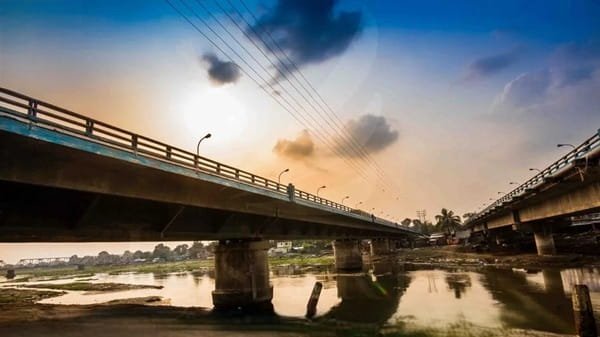
Saraighat Bridge is one of Assam’s most important historic transport landmarks and the first rail-cum-road bridge built across the Brahmaputra River in Assam. Located in western Guwahati, it connects the Pandu-Jalukbari side of the city with Amingaon on the north bank and has played a major role in linking Guwahati with Lower Assam and the wider Northeast for more than six decades.
The bridge is a double-deck structure, with road traffic using the upper level and railway infrastructure running below. Railway movement began across the bridge in 1962, while Prime Minister Jawaharlal Nehru formally dedicated and named it Saraighat Bridge on 7 June 1963. Its name commemorates the historic Battle of Saraighat fought on the Brahmaputra in 1671.
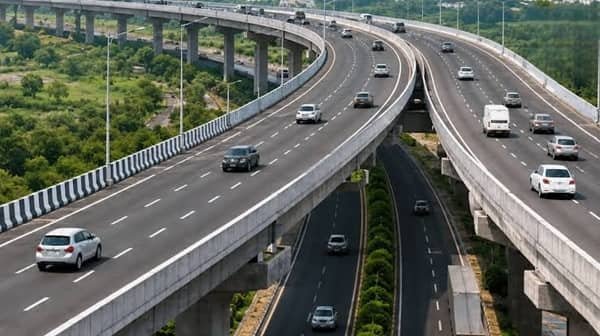
Today, the historic bridge stands beside the New Saraighat Bridge, a separate road-only crossing opened in January 2017. As of August 2026, the road deck of the old Saraighat Bridge is temporarily closed for major repair and restoration work, making the newer bridge particularly important for cross-river traffic.

Quick Overview of Saraighat Bridge
| Particular | Details |
| Name | Saraighat Bridge |
| Location | Guwahati, Assam |
| River | Brahmaputra River |
| Bridge Type | Double-deck rail-cum-road bridge |
| Approx. Length | About 1.3 km |
| Road Width | Around 7.3 metres |
| Rail Operations Began | 1962 |
| Formally Dedicated | 7 June 1963 |
| Connects | Pandu/Jalukbari with Amingaon |
| Major Highway Corridor | NH-27 |
| South-Bank Areas | Jalukbari, Pandu and Maligaon |
| North-Bank Area | Amingaon |
| Parallel Road Bridge | New Saraighat Bridge |
| New Bridge Opened | 28 January 2017 |
| Current Old-Bridge Road Status | Temporarily closed for 2026 repair work |
| Known For | First rail-cum-road bridge across the Brahmaputra in Assam |
The historic bridge is generally recorded at about 1.3 km long, with a roadway roughly 24 feet or 7.3 metres wide.
Where is Saraighat Bridge Located?
Saraighat Bridge crosses the Brahmaputra in the western part of Guwahati. The southern approach is associated with Pandu and Jalukbari, while the bridge reaches Amingaon on the northern bank.
Jalukbari is an important western Guwahati transport junction with connections towards Maligaon, Gauhati University, the airport corridor and other parts of the city. Amingaon, on the opposite side, lies on the NH-27 corridor and provides onward road connections towards North Guwahati, Rangia, Baihata Chariali and Lower Assam.
The location explains the bridge’s importance. The Brahmaputra creates a major physical divide through the region, so permanent crossings have enormous value for both local and long-distance transport.
Saraighat Bridge Route and Road Connectivity
Saraighat Bridge forms part of one of the most important road corridors entering and leaving western Guwahati.
Important connections include:
- Jalukbari: Major transport junction immediately on the Guwahati side.
- Pandu: Historic river and railway locality close to the southern approach.
- Maligaon: Important residential and railway administrative area east of the bridge.
- Amingaon: Main locality at the north-bank end.
- North Guwahati: Accessible through the road network beyond Amingaon.
- Baihata Chariali: Important junction farther north, providing onward regional connections.
- Rangia: Major transport and railway centre reached through the north-bank highway network.
- Lower Assam: The bridge is an important gateway for road movement between Guwahati and western Assam.
NH-27 passes through the wider Guwahati-Jalukbari-Amingaon corridor and continues across Assam as part of one of India’s major east-west highway routes.
Why is Saraighat Bridge Important?
The bridge fundamentally changed transportation in Assam.
Before a permanent bridge existed, crossing the Brahmaputra around Guwahati depended much more heavily on ferries and fragmented railway connections. Saraighat Bridge created a direct road and railway link across the river and helped integrate the transport systems on its two banks.
Its importance includes:
- Connecting the north and south banks of the Brahmaputra
- Supporting both railway and road movement
- Providing access between Guwahati and Lower Assam
- Strengthening regional trade and freight transport
- Supporting strategic movement into the Northeast
- Linking important railway corridors through Guwahati
Even after additional bridges were constructed, Saraighat remained important because of its railway function and its location on an established transport corridor.
Traffic Conditions at Saraighat Bridge
Traffic around Saraighat can be substantial, particularly near the Jalukbari and Amingaon approaches, where local vehicles mix with long-distance highway traffic.
Conditions are currently unusual because the old bridge’s road deck is undergoing major repairs. From 5 AM on 13 July 2026, the old Saraighat Bridge was closed to all vehicular traffic for an expected repair period of around two months. The announced closure period extends into September 2026.
During the closure, road traffic has been redirected to the adjacent New Saraighat Bridge, where two-way movement has been arranged. Authorities also introduced diversions for some heavy and commercial vehicles to reduce pressure on the crossing.
As a result, delays may occur around:
- Jalukbari
- Saraighat approaches
- Amingaon
- North-bank highway junctions
- Connecting routes during office and freight-traffic periods
Drivers travelling through the corridor while repairs continue should allow extra time and follow current Guwahati Traffic Police instructions because diversion arrangements can change as work progresses.
History and Engineering of Saraighat Bridge
Plans for a permanent Brahmaputra crossing around Guwahati had existed for decades, but the project gained momentum after independence.
Construction began around 1958-59, and the bridge was completed in September 1962. The first railway engine crossed on 23 September 1962, followed by goods-train operations later that year. The roadway came into service in 1963, with the formal dedication taking place on 7 June.
The bridge uses a substantial steel-truss arrangement supported on large river piers. Its two-level configuration was especially significant because a single structure could accommodate both road and railway transportation.
Historical project records place the bridge about 40 feet above the normal high flood level, providing clearance for navigation beneath the structure.
The bridge reportedly required around 14,000 tonnes of steel and was built at a cost of approximately ₹10.65 crore at the time—an enormous infrastructure investment for the early 1960s.
Old Saraighat Bridge and New Saraighat Bridge
The two parallel bridges serve different purposes and should not be confused.
The old Saraighat Bridge is the historic double-deck rail-cum-road structure.
The New Saraighat Bridge, opened on 28 January 2017, is a separate road-only bridge built alongside it to provide additional vehicle capacity. It measures about 1,493.58 metres and was designed with a three-lane carriageway.
The new bridge was developed partly to reduce congestion at Jalukbari and Amingaon and to take pressure off the ageing original structure.
Its role has become even more obvious during the 2026 repairs, when it has had to accommodate road traffic normally distributed across both crossings.
Another Rail-Cum-Road Bridge Planned at Saraighat
Railway capacity at Saraighat is also expected to expand in the future.
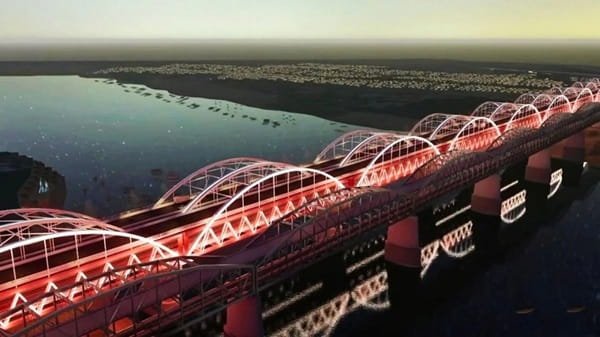
Northeast Frontier Railway has sanctioned another rail-cum-road bridge across the Brahmaputra as part of the doubling of the Agthori-Kamakhya railway section. The proposed project includes a roughly 1.3-km steel-composite river bridge within a larger 7.062-km corridor.
Plans call for:
- Two railway tracks on the lower deck
- A three-lane road on the upper deck
- Pedestrian footpaths
- Connections towards Agthori on the north bank
- Connections towards Kamakhya on the south bank
NFR had earlier announced a December 2029 target for the project, although large infrastructure schedules can change as construction advances. A July 2026 industry update continued to describe the new crossing as moving towards construction.
Once completed, it should significantly expand both railway and road capacity across this part of the Brahmaputra.
Public Transport Near Saraighat Bridge
The Saraighat corridor is served by city buses, regional buses, taxis and other road-based transport.
On the south bank, Kamakhya Railway Station is one of the most useful major railway facilities for the western Guwahati area. Guwahati Railway Station lies farther east in the city.
The old bridge itself also carries railway infrastructure as part of the Northeast Frontier Railway network, making Saraighat unusual among Guwahati’s river crossings.
Amingaon and surrounding north-bank areas are served primarily by buses, shared vehicles, taxis and private transport.
Major Landmarks and Facilities Near Saraighat Bridge
Important landmarks around the wider bridge corridor include:
- Gauhati University: Major educational institution at Jalukbari.
- Kamakhya Railway Station: Important railway station on the south-bank side.
- Pandu: Historic Guwahati riverfront and railway locality.
- Maligaon: Headquarters area associated with Northeast Frontier Railway.
- IIT Guwahati: Major national institute located on the north-bank side of the Brahmaputra.
- Bhupen Hazarika Samadhi Kshetra: Important cultural landmark at Jalukbari.
- Amingaon: Major north-bank residential, industrial and highway locality.
Nearby Areas to Saraighat Bridge
- Jalukbari: Major western Guwahati locality and the principal south-bank road approach.
- Pandu: Historic riverside neighbourhood close to the bridge.
- Maligaon: Important residential and railway area immediately east of the bridge corridor.
- Amingaon: Main north-bank locality directly connected through Saraighat.
- North Guwahati: Large developing area reached through the north-bank road network.
- Adabari: Busy residential and transport locality near Jalukbari in western Guwahati.
FAQs About Saraighat Bridge
Q1. Can boats and river traffic pass beneath Saraighat Bridge?
Yes. The historic bridge was designed with substantial clearance above the normal high flood level so that river navigation could continue beneath it.
Q2. Which side of Saraighat Bridge should travellers use for IIT Guwahati?
IIT Guwahati is on the north-bank side of the Brahmaputra. Travellers crossing from western Guwahati through the Saraighat corridor reach the Amingaon side first and then continue through local roads towards the IIT campus.
Q3. Which railway station is convenient for the Jalukbari side of Saraighat Bridge?
Kamakhya Railway Station is an important railway station serving western Guwahati and is considerably closer to the Saraighat-Jalukbari corridor than the main Guwahati Railway Station.
Q4. Is Saraighat Bridge mainly a tourist attraction?
No. Although the Brahmaputra setting and historic structure make it visually impressive, Saraighat Bridge is primarily working transport infrastructure. The old structure continues to have railway importance, while its parallel road bridge carries substantial highway traffic.