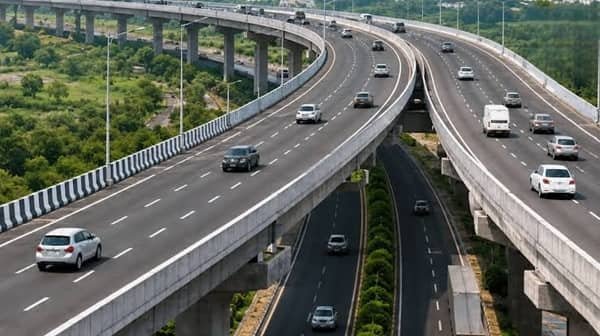
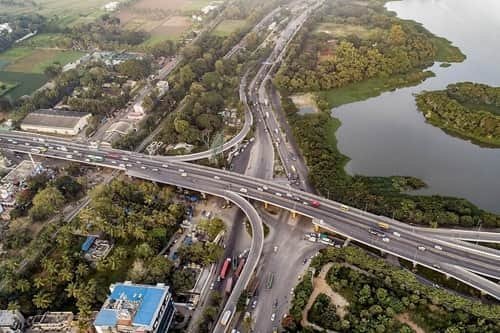
Hebbal Bridge, more commonly known as Hebbal Flyover, is one of the most important road interchanges in North Bengaluru. Located at the meeting point of Ballari Road/NH-44 and the Outer Ring Road (ORR), it handles traffic travelling between central Bengaluru, Kempegowda International Airport, Yelahanka, Nagawara, KR Puram, Tumakuru Road and several fast-growing northern neighbourhoods.
The flyover was opened to traffic in May 2003 and was developed by the Bangalore Development Authority (BDA), with Gammon India undertaking its construction. What began as a major grade separator has gradually evolved into a complicated network of elevated carriageways, ramps and loops as North Bengaluru expanded and airport traffic increased.
Hebbal has long been associated with severe traffic congestion, but major changes made during 2025-26 have improved movement through the core junction. New ramps and better separation of traffic streams have reduced delays on several approaches, although bottlenecks continue farther towards Mehkri Circle, Ganganagar and other connecting roads.
Quick Overview of Hebbal Bridge
| Particular | Details |
| Name | Hebbal Bridge/Hebbal Flyover |
| Location | Hebbal, North Bengaluru, Karnataka |
| Major Highway | NH-44/Ballari Road |
| Major Junction | NH-44 and Outer Ring Road |
| Opened | 29 May 2003 |
| Developed By | Bangalore Development Authority |
| Original Contractor | Gammon India |
| Flyover Network Length | Around 5.2 km including loops |
| Major Directions | Airport, Yelahanka, KR Puram, Nagawara, Tumakuru Road and central Bengaluru |
| Nearby Areas | Hebbal, RT Nagar, Nagawara, Sanjaynagar, Kodigehalli and Kempapura |
| Nearby Landmark | Hebbal Lake |
| Public Transport | BMTC buses, airport buses, autos and cabs |
| Rail Access | Hebbal Railway Station |
| Metro Status | Hebbal Metro Station under development |
| Known For | Major airport-road interchange and North Bengaluru traffic hub |
The approximately 5.2-km figure refers to the overall network of elevated structures and loops, rather than one simple straight bridge span.
Where is Hebbal Bridge Located?
Hebbal Bridge is located in North Bengaluru, beside Hebbal Lake and close to the Bengaluru Baptist Hospital. It occupies a strategic position where Ballari Road, which continues towards Kempegowda International Airport, intersects with the Outer Ring Road.
Towards the south, Ballari Road continues through Mehkri Circle towards central Bengaluru. Travelling north leads towards Kodigehalli, Byatarayanapura, Jakkur, Yelahanka and eventually the airport.
The ORR provides east-west connections. Traffic travelling east can move towards Nagawara, Hennur, Kalyan Nagar and KR Puram, while the western side provides access towards BEL Road, Yeshwanthpur and the Tumakuru Road corridor.
Because several major routes converge at one location, Hebbal functions more like a large urban interchange than a conventional flyover.
Hebbal Bridge Route and Road Connectivity
The importance of Hebbal Bridge comes mainly from the number of important routes that meet here.
Major connections include:
- Kempegowda International Airport: NH-44 continues north from Hebbal towards the airport.
- Yelahanka: Easily accessible along the Airport Road corridor.
- Central Bengaluru: Ballari Road continues south through Mehkri Circle towards the city.
- Nagawara: Connected through the eastern side of the Outer Ring Road.
- KR Puram: Reached by following the ORR eastwards through Nagawara and adjoining areas.
- Yeshwanthpur: Connected through the western ORR and surrounding road network.
- Tumakuru Road: Traffic from the western ORR can join the Hebbal interchange before moving towards central Bengaluru or the airport.
- Manyata Tech Park: One of the major employment destinations near Hebbal, accessed towards Nagawara.
This makes Hebbal particularly important for airport passengers as well as employees travelling between North Bengaluru and the city’s large technology and commercial districts.
Why is Hebbal Bridge Important?
Hebbal Bridge is one of the main gateways between central Bengaluru and the rapidly expanding northern part of the city.
When the flyover opened in 2003, Bengaluru’s airport was still operating from HAL. The subsequent opening of Kempegowda International Airport at Devanahalli dramatically increased the importance of the Hebbal-Ballari Road corridor. Airport-bound traffic from large parts of Bengaluru now passes through or close to this junction.
Residential and commercial growth has added another layer of traffic. Hebbal, Kempapura, Jakkur, Yelahanka, Thanisandra and Nagawara have seen extensive development, while Manyata Tech Park has become one of Bengaluru’s major employment centres.
The junction therefore handles several traffic streams at once: airport passengers, office commuters, local residents, buses and vehicles moving between the eastern and western sections of the ORR.
Traffic Conditions at Hebbal Bridge
For years, Hebbal was regarded as one of Bengaluru’s most difficult traffic bottlenecks. Vehicles from Airport Road, KR Puram, Nagawara, Kodigehalli and Tumakuru Road frequently converged on limited elevated lanes and surface roads.
The situation changed considerably after additional flyover loops became operational.
A new 1.25-km ramp and associated loop connections opened around the beginning of 2026, helping separate vehicles arriving from different directions before they reached the main junction. Early traffic assessments reported a significant reduction in congestion at the core flyover.
A January 2026 test during the morning peak found that a stretch near Esteem Mall that had previously taken 20-30 minutes in severe congestion could be crossed in only a few minutes after the changes.
However, this does not mean the entire Hebbal corridor is congestion-free.
Traffic can still slow near:
- Bengaluru Baptist Hospital
- Mehkri Circle
- Ganganagar
- CBI Junction
- UAS/Veterinary College side
- ORR approaches during office hours
The changes have therefore improved movement through Hebbal itself, while some traffic pressure has shifted farther along the connecting roads.
Hebbal Flyover Expansion and New Traffic Loops
Expansion of Hebbal Flyover has been discussed and implemented in several stages because the original structure could no longer comfortably handle present-day traffic volumes.
BDA’s augmentation project includes new ramps designed to separate vehicles coming from different approaches.
A major component involved creating additional city-bound capacity for vehicles travelling from the Airport Road and ORR sides. Construction was particularly complicated because the area contains active railway tracks, heavy road traffic and Metro infrastructure. Seven girders were installed over railway tracks in 2025 as part of the new roadway.
By late 2025 and early 2026, new loops had begun opening to traffic. One important connection allows vehicles from the Nagawara/KR Puram direction to move towards Mehkri Circle with less dependence on the heavily congested surface junction. Another improves movement from the Kodigehalli and Tumakuru Road side.
The result is a more separated traffic pattern, reducing the need for different streams of vehicles to repeatedly merge at the same point.
Mehkri Circle Project and the Next Phase of Connectivity
Improving Hebbal has created another challenge: vehicles leaving the flyover towards central Bengaluru still need to pass through Mehkri Circle.
With traffic flowing faster from Hebbal, Mehkri Circle has emerged as an important downstream bottleneck.
In 2026, BDA again invited tenders for a proposed 1.6-km, four-lane elevated flyover between the UAS Staff Quarters area and Mehkri Circle. The project has an estimated cost of about ₹419.7 crore and includes an elevated rotary with ramps towards Yeshwanthpur and Jayamahal.
The proposed project illustrates how Hebbal’s traffic problem cannot be solved by improving one junction alone. Efficient movement depends on providing enough capacity along the entire corridor from the airport side through Hebbal and onward towards central Bengaluru.
Design and Development of Hebbal Flyover
Hebbal Flyover was a major engineering project for Bengaluru when constructed in the early 2000s.
The original project used a cloverleaf-style arrangement of ramps and loops, allowing traffic from different roads to change direction without relying entirely on a conventional signal-controlled intersection. Contemporary reporting placed the original project cost at around ₹42 crore.
Gammon, the project’s contractor, described Hebbal as a major urban flyover project built for the Bangalore Development Authority.
Over time, however, Bengaluru grew far beyond the traffic conditions for which the original interchange had been designed. Instead of replacing the entire structure, authorities have progressively added new ramps and connections.
This explains why today’s Hebbal Flyover appears as a network of curved elevated roads rather than a single straightforward flyover.
Public Transport Near Hebbal Bridge
Hebbal is one of North Bengaluru’s important public-transport interchange areas.
BMTC buses connect Hebbal with central Bengaluru, Yelahanka, Nagawara, KR Puram and numerous other neighbourhoods. Airport buses also use the wider Ballari Road corridor, making Hebbal a useful boarding or interchange area for some airport-bound travellers.
Hebbal Railway Station provides suburban and conventional rail access nearby.
Metro connectivity is also under development. The future Blue Line/Airport Metro corridor is being built through the Hebbal area, but Hebbal does not yet have an operational Namma Metro station as of August 2026. The wider Blue Line remains under construction.
BMRCL also lists a proposed 36.59-km Sarjapur-Hebbal Phase 3A corridor, which would further increase Hebbal’s importance as a future interchange if implemented as planned.
Major Landmarks and Facilities Near Hebbal Bridge
Important places around the junction include:
- Hebbal Lake: One of the best-known natural landmarks beside the flyover.
- Bengaluru Baptist Hospital: Major healthcare institution near the southern approach.
- Manyata Tech Park: Large employment hub towards Nagawara.
- Esteem Mall area: Well-known reference point on the northern side of the junction.
- University of Agricultural Sciences: Large institutional campus towards the Bellary Road-Mehkri Circle corridor.
- Hebbal Railway Station: Railway facility serving the wider neighbourhood.
- Nagawara: Important residential and commercial area on the ORR.
The surrounding Hebbal-Kempapura-Nagawara belt also has hotels, hospitals, schools, restaurants and large residential developments.
Nearby Areas to Hebbal Bridge
- Hebbal: The immediate neighbourhood surrounding the interchange and lake.
- Hebbal Kempapura: Major residential locality north of the flyover and close to Airport Road.
- RT Nagar: Established residential and commercial locality south-east of Hebbal.
- Nagawara: Important ORR locality and gateway towards Manyata Tech Park.
- Sanjaynagar: Residential neighbourhood located towards the south-west.
- Kodigehalli: Located north-west of Hebbal with access towards Sahakar Nagar and Airport Road.
- Jakkur: Fast-growing North Bengaluru locality farther along the airport corridor.
- Thanisandra: Major residential development zone accessible through Nagawara and the surrounding road network.
FAQs About Hebbal Bridge Bengaluru
Q1. Should airport passengers avoid Hebbal during peak hours?
Not necessarily. The new loops have substantially improved traffic movement through the main junction, but delays can still occur on surrounding roads. Airport passengers should therefore keep a buffer for the overall journey rather than judging travel time only by conditions on the flyover.
Q2. Is Hebbal Bridge a normal bridge across Hebbal Lake?
No. Despite being popularly searched as “Hebbal Bridge,” the landmark is primarily a multi-level road flyover and interchange beside Hebbal Lake. It does not function as a conventional lake-crossing bridge.
Q3. Will the future Hebbal Metro connect directly to Bengaluru Airport?
The under-construction Blue Line is planned to connect the city with Kempegowda International Airport through the Hebbal corridor. Hebbal is therefore expected to become a much more important public-transport interchange once this section becomes operational.
Q4. Why are there so many separate ramps at Hebbal?
The ramps allow vehicles coming from Airport Road, the Outer Ring Road and local roads to join different routes without all traffic meeting at one signal-controlled junction. The recent additions further separate these traffic streams, which is one reason congestion at the core junction has reduced.