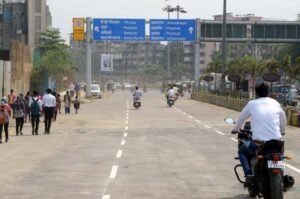
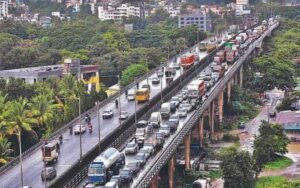
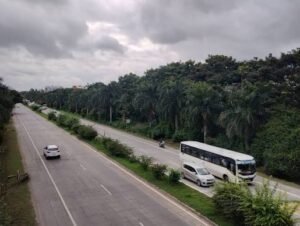
Holkar Bridge is one of Pune’s oldest surviving road bridges and an important historic landmark in the Khadki-Yerawada corridor. Built across the Mula River, the stone bridge has been part of Pune’s transport landscape since the Maratha-era period and continues to stand alongside newer road infrastructure serving this busy part of the city.
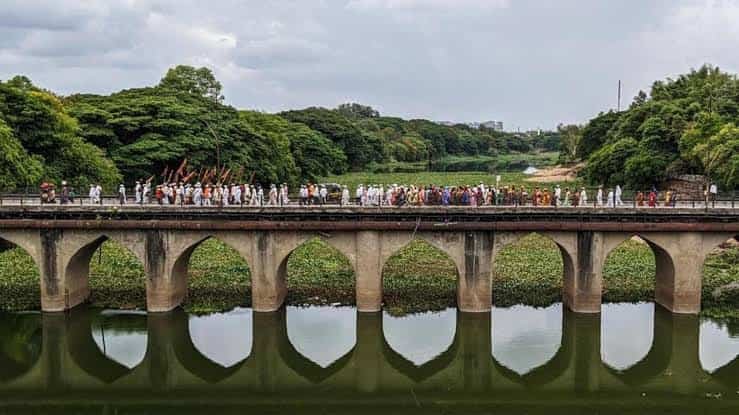
The historic bridge is notable for its 19 masonry arches, narrow roadway and distinctive old-world design. The Maharashtra Gazetteer records Holkar’s Bridge at 548 feet long, with nineteen segmental arches and a 15-foot-wide roadway. Although modern parallel crossings now carry much of the higher-volume traffic in the corridor, the old bridge remains an important physical link and heritage structure connecting the Khadki side with the Yerawada-Bombay Sappers side.
Its location also gives the bridge considerable everyday importance. Roads around Holkar Bridge provide access towards Khadki, Vishrantwadi, Yerawada, Sangamwadi, Pune Airport and central Pune. During the monsoon, however, rising water levels in the Mula can affect the old bridge and occasionally lead to traffic restrictions. In July 2026, for example, heavy rainfall caused the river to rise close to the bridge deck.
Quick Overview of Holkar Bridge
| Particular | Details |
| Name | Holkar Bridge |
| Location | Khadki, Pune, Maharashtra |
| River | Mula River |
| Bridge Type | Historic stone masonry arch bridge |
| Length | About 548 feet or 167 metres |
| Number of Arches | 19 |
| Historic Roadway Width | About 15 feet |
| Construction Period | Maratha-era/early 19th-century period |
| Connects | Khadki side with Yerawada/Bombay Sappers side |
| Nearby Areas | Khadki, Yerawada, Vishrantwadi, Sangamwadi and Bopodi |
| Major Nearby Road | Holkar Bridge Road/Mula Road corridor |
| Public Transport | PMPML buses, autos and cabs |
| Known For | Historic arches, Maratha-era association and Mula River crossing |
| Monsoon Concern | Rising river levels can affect the old crossing |
The Gazetteer describes the bridge as a stone-and-lime masonry structure with nineteen arches and teak side railings.
Where is Holkar Bridge Located?
Holkar Bridge is situated in the Khadki Cantonment area of Pune, close to the Bombay Engineering Group and Centre, popularly known as Bombay Sappers. The historic structure crosses the Mula River and connects the Khadki side with roads leading towards Yerawada and Vishrantwadi.
Older Maharashtra Gazetteer records place Holkar Bridge east of Deccan College and identify it as an important crossing between Pune and Kirkee, the older spelling of Khadki.
The surrounding area includes defence establishments, cantonment roads and some of Pune’s older neighbourhoods. Because of these military properties, road expansion and bridge-development projects in the corridor have historically required coordination with defence authorities. Earlier plans for parallel bridges, for example, were delayed while permissions from the Ministry of Defence were being obtained.
Today, the Holkar Bridge name is used both for the historic structure and as a familiar reference point for the surrounding road corridor.
Holkar Bridge Route and Road Connectivity
Holkar Bridge occupies a useful position between Khadki and eastern Pune.
From the Khadki side, motorists can connect towards Khadki Bazaar, Bopodi, Aundh Road and the old Pune-Mumbai road network. Routes around Mula Road also provide connections towards Wakdewadi and Shivajinagar.
On the opposite side, roads around Bombay Sappers provide access towards Yerawada, Vishrantwadi, Alandi Road and the airport side.
Important connections include:
- Khadki: The main locality on the western side of the river.
- Yerawada: Major eastern Pune locality accessible through the Bombay Sappers road network.
- Vishrantwadi: Important residential and transport area reached from the eastern side.
- Sangamwadi: Connected through roads leading towards central Pune and Bund Garden.
- Bopodi: Located beyond Khadki towards the old Mumbai-Pune road.
- Shivajinagar: Accessible through Khadki, Wakdewadi and adjoining central-Pune routes.
- Pune Airport: Reached through Yerawada and Vishrantwadi/Airport Road connections.
- Koregaon Park: Accessible through Yerawada, Bund Garden and surrounding road corridors.
The wider Khadki-Yerawada corridor is therefore useful for commuters who want to move between north-central Pune and the eastern side without travelling deep into the city centre.
Why is Holkar Bridge Important?
Holkar Bridge has two very different forms of importance.
The first is historical. It represents an early generation of Pune road infrastructure and has survived major changes in the city’s population, traffic and development. Its stone arches and relatively narrow deck provide a visible reminder of how bridges were constructed before modern reinforced-concrete flyovers became standard.
The second is geographical. The Mula River separates Khadki from parts of Yerawada and eastern Pune. A crossing at this location therefore supports direct movement between neighbourhoods that would otherwise require longer routes.
As traffic increased, the historic bridge’s narrow width became unsuitable for carrying all modern road demand. In 2009, the bridge was reported to be only around 6.5 metres wide in its then-current traffic arrangement, prompting plans for parallel bridge infrastructure rather than relying solely on the old crossing.
The result is a corridor where old and modern infrastructure now exist side by side.
Traffic Conditions at Holkar Bridge
Traffic around Holkar Bridge depends heavily on conditions in Khadki, Yerawada and the surrounding defence-road network.
The old structure itself is narrow compared with modern city roads. Newer parallel infrastructure has helped distribute traffic, but congestion can still occur on approach roads, particularly during weekday office hours.
Traffic pressure is influenced by movement towards:
- Yerawada and Pune Airport
- Vishrantwadi and Alandi Road
- Khadki and Bopodi
- Sangamwadi and Bund Garden
- Shivajinagar
- Defence establishments around Bombay Sappers
Another important factor is road quality. Khadki Cantonment Board carried out repairs on Holkar Road and several other cantonment roads in October 2025 after residents complained about potholes and difficult monsoon travel conditions.
A larger traffic change is also developing on the Yerawada side. In 2026, PMC began work on a ₹115-crore flyover and grade-separator project intended to improve movement between Bund Garden Road, Khadki, Alandi Road, Sangamwadi and the airport corridor. Once completed, that project could change traffic distribution around the wider Holkar Bridge-Yerawada network.
History and Architecture of Holkar Bridge
Holkar Bridge is considerably older than most operational road bridges in Pune.
Historic government records describe it as a stone-and-lime masonry bridge with nineteen segmental arches. The Gazetteer gives the bridge length as 548 feet and the roadway width as 15 feet, with timber railing forming its original side protection.
Another Gazetteer description records the bridge at about 498 feet in overall measured length, depending on the reference points used, with nineteen arches varying in span and a roadway roughly 33 feet above the riverbed. The difference between historical measurements is one reason it is safer to describe the bridge as roughly 500–550 feet long, with 548 feet being the commonly cited figure.
The bridge is closely associated with the Holkar family of the Maratha period. Nearby heritage remains include a Holkar memorial and Shiva temple. Indian Express reporting on the Holkar Chhatri notes the historical presence of members of the Holkar family in this area and places the old bridge immediately north of the memorial complex.
Its repeated stone arches are the bridge’s most recognisable architectural feature and distinguish it sharply from the modern concrete structures beside it.
Holkar Bridge and Pune’s Monsoon Flooding
Monsoon conditions are particularly relevant to the old Holkar Bridge because its arches and relatively low historic structure interact directly with rising river levels.
During major rainfall events, authorities have closed the old crossing as a precaution. In the severe Pune floods of August 2019, rising water levels forced traffic police to close Old Holkar Bridge along with several other low or vulnerable crossings.
The issue has also raised a larger urban-planning debate.
A Maharashtra government-appointed expert committee studying Pune flooding recommended examining whether old structures such as Holkar Bridge restrict river flow. Its report suggested that the hydraulic performance of the bridge should be assessed and that removal could be considered if necessary for flood management.
This was a recommendation, not a confirmed demolition decision. The bridge remained standing in 2026.
The concern became visible again in July 2026 when heavy rainfall caused the Mula River to rise very close to the old bridge deck.
For commuters, this means the bridge corridor may require special attention during periods of intense monsoon rain and dam discharge.
Heritage Value and the Future of Old Holkar Bridge
Holkar Bridge presents Pune with an unusual planning question: how should an old structure be preserved when it also occupies an active river channel?
On one side is its clear heritage value. The bridge represents an early period of Pune’s development, survives with its characteristic masonry arches and is closely connected with the history of the Holkar family and Khadki.
On the other side are practical concerns involving floodwater, river hydraulics and modern traffic needs. The 2024 expert-panel recommendation to evaluate its impact on river flow brought these competing priorities into focus.
Because newer parallel road structures can handle much of the modern traffic demand, the old bridge no longer needs to perform the same role it once did. That potentially creates more flexibility for preservation, restricted use or future river-management decisions.
As of August 2026, however, no final government decision to permanently remove the historic structure has been confirmed in the sources reviewed.
Public Transport Near Holkar Bridge
The wider Khadki-Yerawada area is served by PMPML buses, auto-rickshaws and app-based cabs.
Bus services operate through Khadki, Yerawada, Vishrantwadi, Sangamwadi and adjoining areas, making road-based public transport the main option immediately around the bridge.
For railway travel, Khadki Railway Station is the closest significant suburban and passenger rail facility on the western side.
Pune Metro does not have a station directly at Old Holkar Bridge. Metro services can instead be accessed from other parts of the Khadki-central Pune or Yerawada-side network depending on the traveller’s destination.
Major Landmarks and Facilities Near Holkar Bridge
Important landmarks around the bridge include:
- Bombay Engineering Group and Centre: Major Indian Army engineering establishment near the eastern approach.
- Holkar Chhatri and Temple: Historic memorial complex associated with the Holkar family.
- Khadki Cantonment: One of Pune’s major historic military areas.
- Khadki Railway Station: Important railway facility serving the locality.
- Khadki War Cemetery: Historic cemetery in the wider cantonment area.
- Deccan College: Major historic educational institution located towards Yerawada.
- Yerawada: Large residential, commercial and institutional locality east of the river.
Nearby Areas to Holkar Bridge
- Khadki: The immediate western-side locality and a major cantonment area.
- Yerawada: Important eastern Pune neighbourhood connected through the bridge corridor.
- Vishrantwadi: Residential and transport hub farther northeast.
- Bopodi: Locality north-west of Khadki with access to the old Pune-Mumbai road.
- Sangamwadi: Located towards central Pune and useful for reaching Bund Garden and Shivajinagar.
- Aundh Road: Residential corridor accessible through Khadki.
- Wakdewadi: Important central-north Pune locality between Khadki and Shivajinagar.
FAQs About Holkar Bridge Pune
Q1. Is there a toll for using Holkar Bridge?
No. Holkar Bridge forms part of Pune’s normal urban road network and does not operate as a standalone tolled crossing.
Q2. Can pedestrians use the historic Holkar Bridge?
The historic bridge has long had provision for pedestrian movement, including side protection and walkway arrangements. However, temporary restrictions may be introduced during flooding, maintenance or traffic-management operations.
Q3. Are the ghost stories about Holkar Bridge historically proven?
No. Stories describing Holkar Bridge as haunted are part of local folklore, not verified historical fact. The area does contain old memorials and cemeteries, which likely contributed to these stories over time. Indian Express has documented the existence of the folklore while treating it as local belief rather than established fact.
Q4. Why do some sources give different lengths for Holkar Bridge?
Historic records use different measurement points. One Maharashtra Gazetteer record gives 548 feet, while another gives approximately 498 feet. Both consistently describe the structure as having 19 arches, so the variation appears to come from how the bridge limits were measured rather than from two different bridges.
Q5. Should motorists rely on Old Holkar Bridge during very heavy monsoon rain?
It is better to check current traffic instructions first. The bridge has been temporarily closed during major flood events, and river levels can rise close to the structure during intense rainfall.