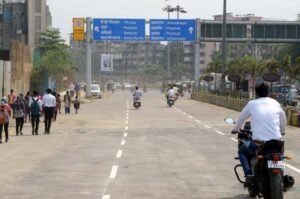
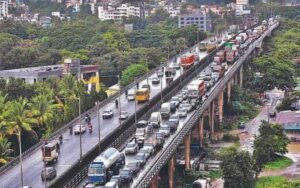
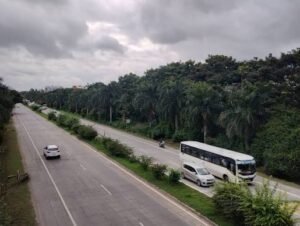
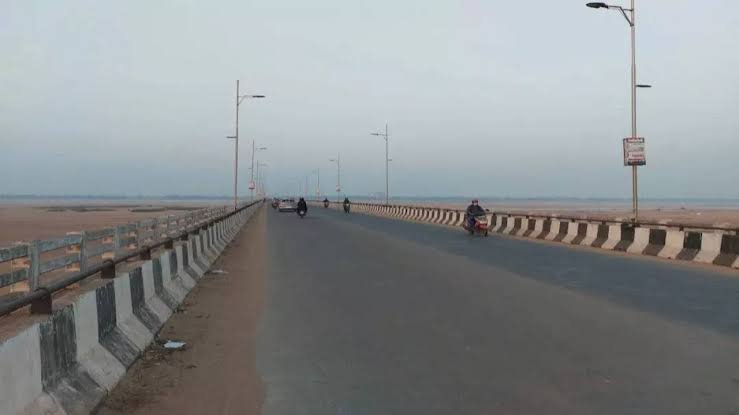
Trisulia Bridge, officially known as Netaji Subhas Chandra Bose Setu, is one of the most important road bridges in Cuttack, Odisha. The bridge crosses the Kathajodi River and links the Judicial Academy/Belleview side of Cuttack with Trisulia, providing a convenient alternative route between Cuttack and Bhubaneswar through Barang and Nandankanan.
Opened on 19 July 2017, the approximately 2.88-km-long bridge transformed connectivity on the western side of Cuttack. It shortened suitable journeys between Cuttack and Bhubaneswar by about 12 km and reduced dependence on the heavily travelled NH-16 corridor. Built at a reported cost of around ₹114 crore, it was Odisha’s longest bridge when inaugurated and also the state’s first three-lane bridge.
Rapid urbanisation around Trisulia, Barang and the northern side of Bhubaneswar has since increased traffic considerably. The Odisha government has consequently approved another high-level bridge parallel to the existing structure to provide additional capacity between the twin cities.
Quick Overview of Trisulia Bridge
| Particular | Details |
| Official Name | Netaji Subhas Chandra Bose Setu |
| Common Name | Trisulia Bridge / Netaji Setu |
| Location | Cuttack, Odisha |
| River | Kathajodi River |
| Connects | Judicial Academy/Belleview side of Cuttack with Trisulia |
| Approximate Length | 2.88 km |
| Bridge Type | Road/girder bridge |
| Traffic Configuration | Three-lane roadway |
| Opened | 19 July 2017 |
| Reported Construction Cost | Around ₹114 crore |
| Major Route | Cuttack–Trisulia–Barang–Nandankanan–Bhubaneswar |
| Nearby Areas | CDA, Trisulia, Barang, Naraj and Bidyadharpur |
| Major Attraction Nearby | Nandankanan Zoological Park |
| Lighting | Solar-supported LED street lighting |
| Current Status | Operational |
| Future Development | New parallel high-level bridge approved |
| Known For | Major alternative Cuttack–Bhubaneswar connection |
Although some inauguration-era reporting gave the bridge length as 2.81 km, more recent project reporting consistently identifies the existing Netaji Setu at about 2.88 km. The difference appears to come from how the bridge and its end sections were measured.
Where is Trisulia Bridge Located?
Trisulia Bridge crosses the Kathajodi River between Belleview Point near the Odisha Judicial Academy in Cuttack and Trisulia on the opposite bank.
The Cuttack-side approach provides convenient access to CDA and central parts of the city. On the other side, motorists reach Trisulia and can continue towards Barang, Nandankanan and Bhubaneswar.
This alignment is especially useful because it provides a route between the twin cities that does not require every vehicle to use the conventional NH-16 connection.
For residents of CDA and western Cuttack, Trisulia Bridge can be particularly convenient for travelling towards:
- Nandankanan
- Patia
- Chandrasekharpur
- Raghunathpur
- Barang
- Northern Bhubaneswar
The bridge has consequently helped transform Trisulia from a relatively less-developed peripheral location into an increasingly important residential and transport corridor.
Trisulia Bridge Route and Road Connectivity
The bridge forms part of an important alternative road between Cuttack and Bhubaneswar.
Major connections include:
- CDA, Cuttack: Conveniently accessible from the Judicial Academy/Belleview side.
- Trisulia: The principal locality at the opposite end of the bridge.
- Barang: Important junction on the route towards Bhubaneswar.
- Nandankanan: Major tourism and transport landmark on the Bhubaneswar side.
- Raghunathpur: Developing residential and commercial area along the Nandankanan road corridor.
- Patia: Major educational, residential and IT-related locality in Bhubaneswar.
- Chandrasekharpur: Important northern Bhubaneswar neighbourhood.
- Naraj: Accessible through the wider Cuttack-Trisulia road system.
- Central Cuttack: Reached through CDA and surrounding city roads.
During major events such as Bali Yatra, traffic authorities also use the Trisulia-Netaji Setu route for vehicles arriving from Bhubaneswar through Nandankanan and Barang, demonstrating its importance as an alternative entry into Cuttack.
Why is Trisulia Bridge Important?
The main purpose of Trisulia Bridge was to provide another dependable connection between Cuttack and Bhubaneswar.
When inaugurated, officials said the bridge would reduce the distance between the twin cities by approximately 12 km for suitable journeys while diverting some traffic away from NH-16.
The bridge is particularly useful for:
- Residents of CDA and western Cuttack
- Commuters travelling towards Patia and Chandrasekharpur
- Visitors heading to Nandankanan
- Students travelling between the twin cities
- Daily office commuters
- Two-wheelers and cars using the Trisulia corridor
- Traffic entering Cuttack during major events
Its opening has also encouraged considerable development around Trisulia. Residential projects, institutions and commercial activity have expanded as the area has become more closely integrated with both Cuttack and Bhubaneswar.
Traffic Conditions at Trisulia Bridge
Traffic has increased considerably since the bridge opened in 2017.
The bridge was initially intended partly to reduce pressure on NH-16, but rapid development around Trisulia and northern Bhubaneswar has created its own substantial commuter demand. Recent planning documents for the second bridge specifically cite growing congestion on both the existing bridge and the wider twin-city road network as reasons additional capacity is required.
Traffic is generally heavier during:
- Weekday morning office hours
- Evening commuting periods
- School and college timings
- Weekends around Nandankanan
- Major festivals
- Bali Yatra and other large Cuttack events
- Temporary diversions from other city roads
Congestion can also develop at Trisulia Chowk, Barang and the Nandankanan road, even when vehicles are moving normally on the bridge itself.
One practical issue reported on the wider Trisulia–Nandankanan corridor has been stray cattle on the roadway, particularly after dark. In 2025, commuters raised concerns about cattle along the Raghunathpur–Barang–Trisulia–Nandankanan stretch, prompting municipal authorities to promise greater enforcement and patrolling.
Construction and Engineering of Trisulia Bridge
Netaji Subhas Chandra Bose Setu took approximately six years to complete and was inaugurated in July 2017 at a reported cost of around ₹114 crore.
The structure was notable when opened for several reasons.
It was:
- Odisha’s longest bridge at the time
- The state’s first three-lane bridge
- A major new high-level crossing of the Kathajodi
- Designed to support large-scale twin-city road movement
Inauguration reporting described the bridge as standing on 68 pillars.
The bridge was named after Netaji Subhas Chandra Bose, who was born in Cuttack. This gives the structure both transport significance and a direct cultural association with the city.
It should be noted that Trisulia Bridge is no longer Odisha’s longest bridge. The 3.4-km T-Setu over the Mahanadi, opened later in Cuttack district, surpassed it in length.
Solar Lighting on Netaji Setu
One interesting feature of Trisulia Bridge is its extensive lighting system.
The bridge initially lacked full street lighting after inauguration. In 2018, a dedicated system using 494 LED lights mounted on 247 poles was introduced.
Later reporting describes the installation as incorporating solar-supported lighting across the bridge, making the structure notable not only during daytime but also after dark.
Lighting is particularly important because the bridge crosses a broad river section where surrounding urban illumination is much lower than inside central Cuttack.
The long illuminated alignment has also made Netaji Setu a recognisable visual landmark on the Kathajodi.
New Parallel Trisulia Bridge
One of the biggest current developments is the plan for a second bridge across the Kathajodi alongside the existing Trisulia Bridge.
The Odisha government moved the proposal forward in 2025, with plans for a four-lane structure approximately 3.127 km long including its approach sections between Trisulia and the Judicial Academy side.
A major update came in April 2026, when the Odisha Cabinet approved a tender worth approximately ₹158.89 crore for a high-level bridge on the upstream side of the existing Netaji Subhas Chandra Bose Setu. The project is intended to create additional direct capacity between Cuttack and Bhubaneswar and has a targeted construction period of 36 months.
The new bridge is particularly important because the existing Trisulia crossing has become increasingly busy as development expands around:
- Trisulia
- Barang
- Nandankanan
- Raghunathpur
- Patia
- Northern Bhubaneswar
The new structure is not a replacement for the present bridge. It is intended to run parallel to it and add road capacity.
Public Transport Near Trisulia Bridge
Road-based public transport is the main option around the bridge.
Local and city buses operate through the wider Cuttack–Trisulia–Barang–Nandankanan–Bhubaneswar corridor, while autos, taxis and app-based cabs are also available depending on the exact locality.
The bridge itself does not carry railway tracks.
For rail travellers, Cuttack Railway Station remains the principal railway hub on the Cuttack side. Travellers on the Bhubaneswar side can connect through the city’s wider bus, railway and urban transport network.
During large gatherings such as Bali Yatra, special shuttle and traffic arrangements may be introduced around the CDA and Belleview side.
Major Landmarks and Facilities Near Trisulia Bridge
Important landmarks around the bridge include:
- Odisha Judicial Academy: Major landmark near the Cuttack-side approach.
- Belleview Square: Important junction close to the bridge entrance.
- CDA Sector areas: Large residential zone immediately accessible from the bridge.
- Trisulia Chowk: Major junction at the opposite end.
- Barang: Important locality on the route towards Bhubaneswar.
- Nandankanan Zoological Park: Major tourism destination farther along the road.
- Naraj: Important locality within the wider Cuttack road network.
- Kathajodi River: The major river channel crossed by the bridge.
Nearby Areas to Trisulia Bridge
- CDA: One of Cuttack’s largest planned residential areas and a major beneficiary of the direct bridge connection.
- Trisulia: Developing locality at the northern end of the bridge and an increasingly important residential corridor.
- Barang: Important town between Trisulia and Bhubaneswar.
- Naraj: Major Cuttack-side locality accessible through adjoining roads.
- Raghunathpur: Rapidly developing northern Bhubaneswar locality on the Nandankanan corridor.
- Patia: Important residential, educational and technology-related area conveniently reached through the Trisulia-Nandankanan route.
FAQs About Trisulia Bridge Cuttack
Q1. Is Trisulia Bridge the same as Netaji Subhas Chandra Bose Setu?
Yes. Trisulia Bridge is the commonly used local name for Netaji Subhas Chandra Bose Setu, which connects Cuttack’s Judicial Academy/Belleview side with Trisulia across the Kathajodi.
Q2. Is Trisulia Bridge still Odisha’s longest bridge?
No. It was Odisha’s longest bridge when it opened in 2017. The later 3.4-km T-Setu in Cuttack district surpassed it.
Q3. Will the new Trisulia bridge replace the existing bridge?
No. The approved high-level bridge will be built upstream and parallel to the existing Netaji Setu to add capacity. The existing bridge is expected to remain part of the road network.
Q4. Is there a separate toll for using Trisulia Bridge?
No separate bridge toll is normally collected simply for crossing Netaji Subhas Chandra Bose Setu. It functions as part of the regular Cuttack–Trisulia road network.
Q5. Is Trisulia Bridge useful for travelling from Cuttack to Nandankanan?
Yes. For travellers starting from CDA and several western parts of Cuttack, the route through Trisulia and Barang towards Nandankanan can be significantly more direct than travelling through the conventional NH-16 corridor. The bridge was specifically developed to create a shorter alternative twin-city connection.